
That Hausa Vegan: Nigerian chef finds community, healing in Oakland
A Nigerian-born chef builds a healthy lifestyle and community in Oakland.
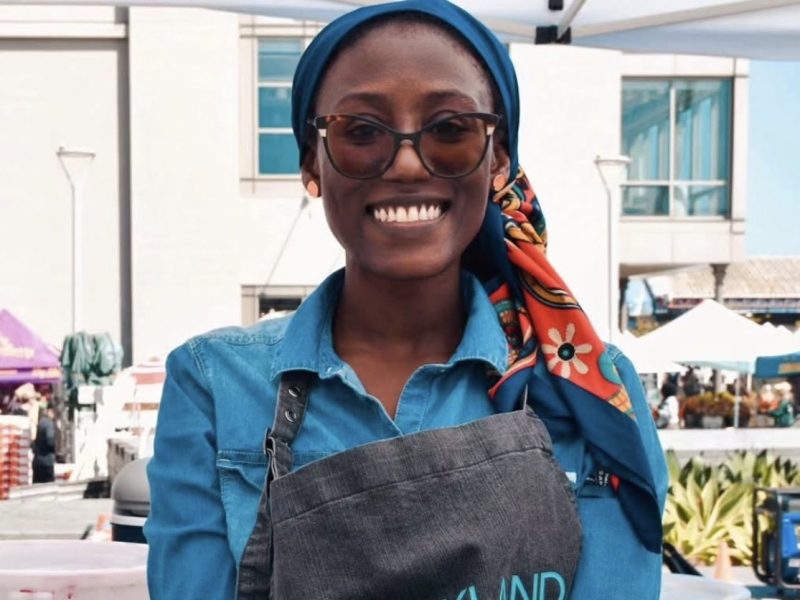
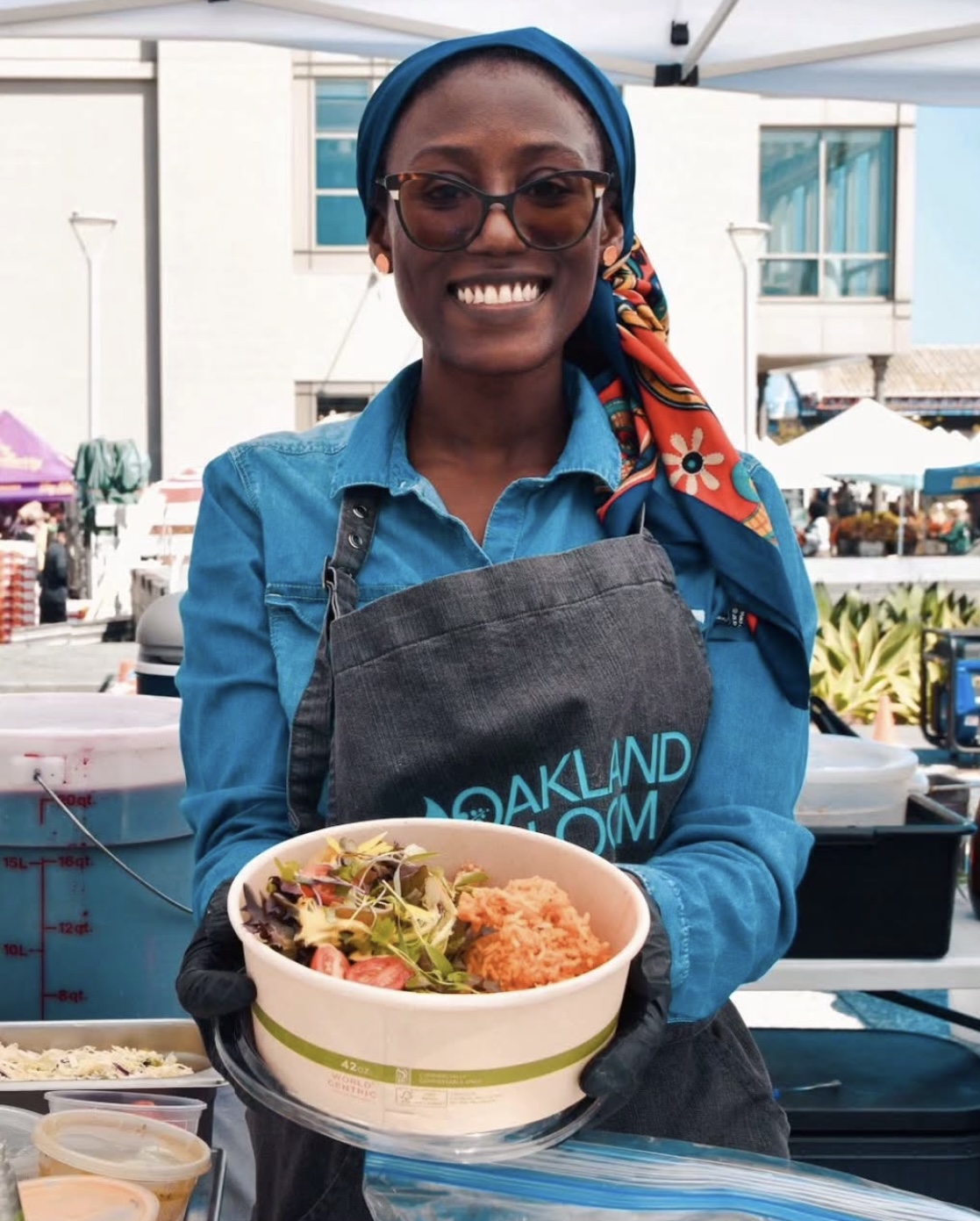
Sitabanat “Sital” Muktari is a world traveler and lover of global cuisine. She spent the early years of her life cooking alongside her mother in Kano, Nigeria.
“It was like a rite of passage,” Muktari said. “My mom would shop every Saturday for tomatoes, bell peppers, habaneros, onions, garlic, and we would prepare soups in bulk for the entire month.”
As the eldest of six children, Sitabanat Muktari (See-Tah-Bah-Not Mook-Tar-ee) dreamed of going to culinary school. After graduating from high school, she shared this goal with her mother. But her mother did not want to pay for culinary school, saying Muktari could learn in the village.
Muktari put her culinary dreams aside and eventually left Nigeria to explore the world.
In pursuit of a new career in a new land, Muktari would encounter severe health challenges that would lead her back to the kitchen.
A lack of nutrition led to ‘excruciating’ pain
After leaving Nigeria, she began to resent cooking. She did not want to live under the social pressures of domestication and marriage.
“ It was like, what if you go to your husband’s house and you don’t know how to cook, and he marries another wife, or he sends you home?” Muktari would think to herself, prompted by the comments of elder women in her community.
In 2012, she arrived in the Bay Area to attend San Francisco State University (SFSU).
Muktari started eating out more often and consuming fast food. Someone warned her that she would have inflammation and allergies within five years, Muktari recalled. By 2013, she left SFSU and started to experience pain and inflammation on a weekly basis. She had only five to seven pain-free days a month, she said.
“That informed the way that I moved,” Muktari said. After months of agony, Muktari discovered that she was living with endometriosis, fibroids, and polycystic ovary syndrome (PCOS). “It was excruciating,” she said.
She wanted relief, but resisted traditional medical treatment.
”I was not going to do any of the surgeries they were recommending,” Muktari said. “I knew I had to do what I had to do to significantly eradicate the inflammation in my body.”
Shifting her consciousness and her diet
In 2015, Muktari went to “Meeting of the Minds,” a gathering at Dolores Park in San Francisco. A woman there spoke about her experience with reproductive pain. Muktari said the meeting changed the way she viewed her diagnosis and her relationship with food.
“Me and my friend hid our low vibrational foods because everyone was there talking about eating live foods,” Muktari said. Low vibrational foods are foods that did not grow from earth, usually non organic and processed. Live or high vibrational foods are organic fruits, vegetables, etc.
Muktari soon removed fast foods and processed foods from her diet and decided to become vegan.
A few people there decided to keep meeting and built a community together. The group, “Shifted Consciousness,” met every Saturday at Qilombo to talk about food. The space, located in West Oakland, hosted a community garden. With access to fresh produce, Muktari prepared meals for the group. Even though she became a cook at Qilombo, she did not yet see herself as a community cook.
Mandisa Snodey knew better. She first met Muktari at Meeting of the Minds as an organizer. Their relationship grew during the Qilombo meetings.
“From the second I tasted her food, I was like, ‘Oh sis is a chef!’” Snodey said. “A lot of us were vegan and coming into consciousness about food, and the way we might be attacked by mainstream society through harmful foods.”
Muktari impressed Snodey with her resourcefulness. Snodey felt like Muktari did magic the way she could feed people an affordable healthy meal with minimal ingredients.
“We would get $40 to $50 worth of groceries and feed a good meal to 20 to 30 people,” Snodey said, “and have left overs to feed the unhoused community.” She encouraged Muktari to expand and start a business.
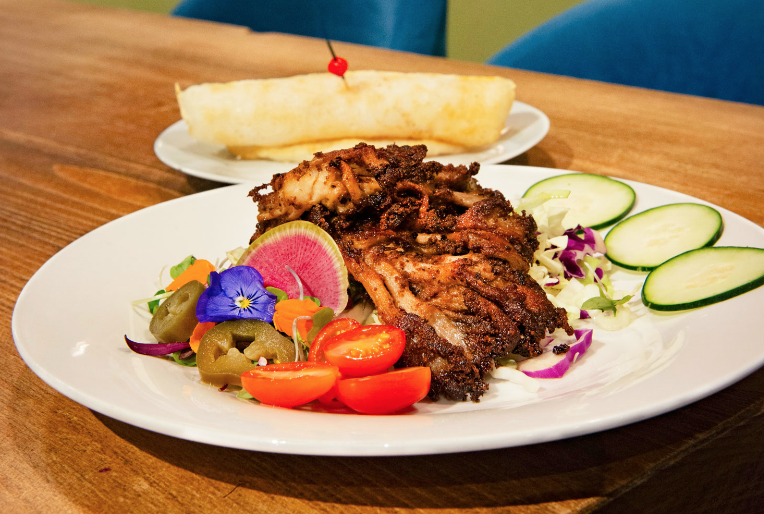
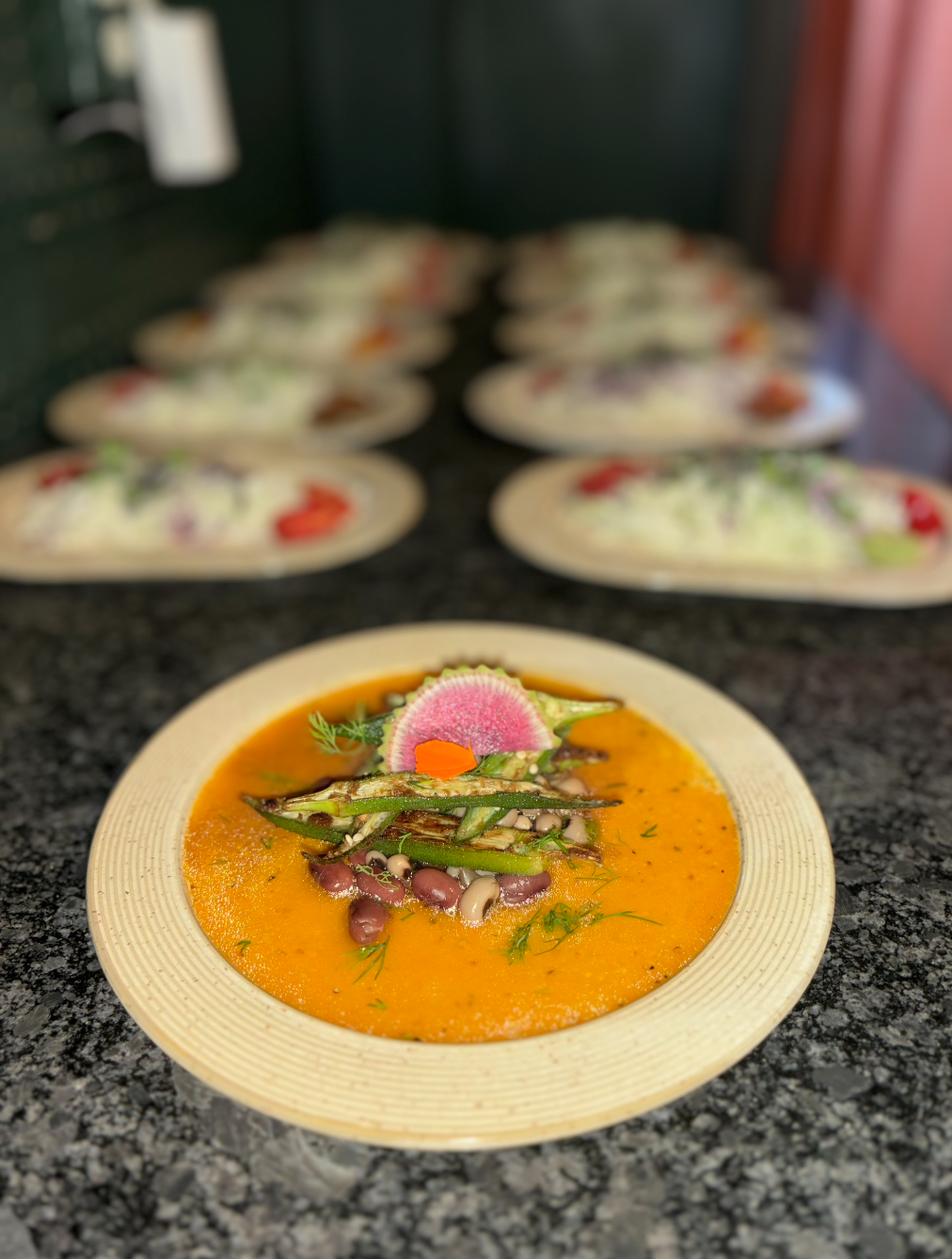
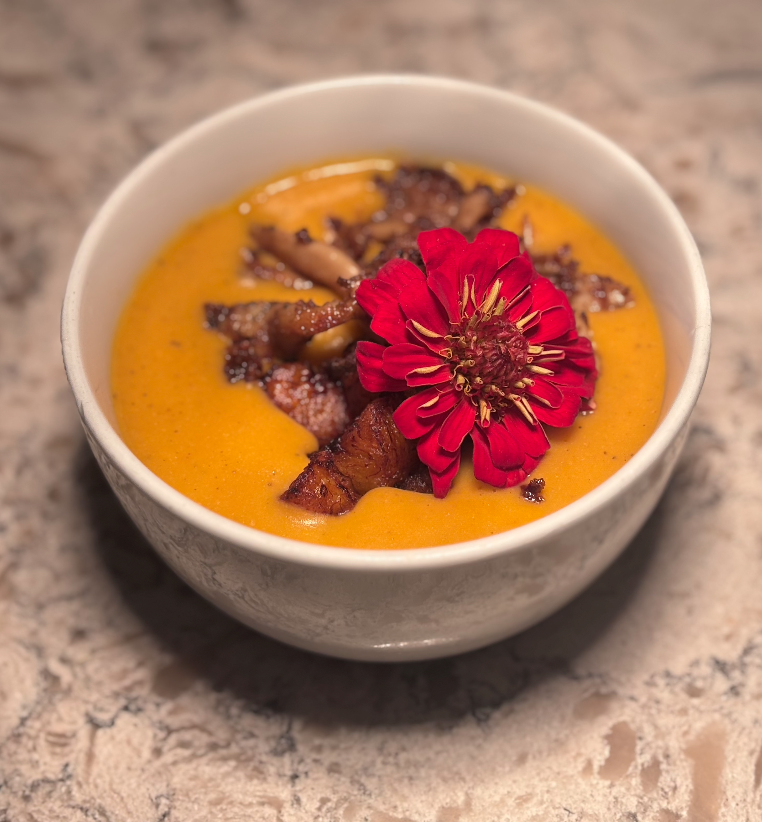
That Hausa Vegan: Cooking on her own terms
“The Hausa Vegan” was a business born as an act of rebellion.
“ It was from my family questioning why I was vegan,” Muktari said. She wanted to be free from familial and societal expectations and define cooking on her own terms.
Muktari branched out and partnered with local businesses like Grandeur and with Snodey’s business, The Good Life Market. Soon she started testing her culinary skills on a professional level.
“I want us to fight to oversee the production of our food, to have access to grow our own food, to have clean foods that have seeds so that we can sustain ourselves.”
Chef Sital Muktari, “Hausa Vegan”
“In my head, I’m a painter. It comes out when I’m cooking,” Muktari said. “ When I was doing my donuts and making my glaze, I would ask myself, ‘How can I use a brush?’”
While Muktari enjoyed making donuts, she wanted to be known for more than making sweets.
One of her mentors encouraged her to go back to her roots. She started to create foods that told stories about her Nigerian culture.
She also loved telling stories about cultures she discovered while traveling. From China to Egypt, Muktari’s travels inspired her to think outside the box as a chef.
As she explores different foods, she is mindful of avoiding cultural appropriation.
“ I reach out to different chefs that I’m inspired by, or people whose culture I’m interested in, and ask to do a collaboration,” Muktari said.
Fighting food ‘apartheid’
In the kitchen, Muktari uses three C’s of cooking as her foundation: creativity, cravings, and convenience.
“ I go based off of the limitations and what equipment I’m allowed to have, then I develop my menu,” Muktari said.
Muktari’s approach calls attention to issues of food access. In Oakland, she emerged as a community cook, serving communities that lack access to food.
“What’s happening in the inner city is an apartheid. It’s intentional,” Snodey said. “So we started to study things we can do to care for ourselves. Gardening and practicing veganism was a huge part of that.”
As Muktari continues to grow in her culinary career, she wants people to learn more about the politics of food through her passion for cooking.
“I want us to fight to oversee the production of our food, to have access to grow our own food, to have clean foods that have seeds so that we can sustain ourselves,” Muktari said. “That would be beautiful.”
Author
