

Oakland organizer, educator, and archivist Greg Morozumi passed away in June.
By day he worked as a U.S. Postal Service letter carrier. By night and weekend, the organic intellectual and lifelong political activist labored for “Third World” liberation and solidarity. He politicized and mentored generations of Oaklanders and helped co-found and guide multiple cultural institutions, including the Eastside Arts Alliance. He was 71.
Early life and politicization
Gregory Jung Morozumi was born March 14, 1954 in San Francisco to activist parents who raised him in Oakland.
His Chinese American mother and Japanese American father met while in college. His mom, Harlem-raised Chang Morozumi, worked as an executive assistant for the state of California. His father, Joseph Morozumi was one of the earliest Asian American trial lawyers in the Bay Area. The U.S. had interned Joseph and his family in Japanese American concentration camps during World War II. The Joseph and Chang Morozumi Scholarship is awarded each year in their names.
His family politicized him as a child. They took him to the Native American Occupation of Alcatraz, recalled Elena Serrano, who co-founded Eastside Arts Alliance with Morozumi and others.
Early acts of interracial solidarity
He grew up in the San Antonio neighborhood and graduated from Oakland High in 1972. One of the first organizations he joined was the East Bay Chinese Youth Council, where he worked with other Asian American Pacific Islander organizations. In a 2009 Oakland Chinatown Oral History interview with longtime collaborator Terry Bautista, he recalled early programs that drew inspiration from the Black Panther Party’s survival programs.
Old enough to be drafted to fight in the Vietnam War, Morozumi shifted to radical politics as a young adult. In the 1970s, he organized with the Chinese-American organization, the Red Guard, which later merged with “I Wor Kuen,” an organization influenced by the Black Panthers and the Young Lords. Morozumi organized in the Bay Area, Los Angeles, and New York.
“We would go to Delano and we’d bring a lot of Filipino, Chicano and other Asian students to help build Agbayani Village.”
Greg Morozumi
He brought college students from Laney College, San Francisco State, and UC Berkeley to support Manongs, Filipino farmworkers in the Central Valley in the 1970s. “We would go to Delano and we’d bring a lot of Filipino, Chicano and other Asian students to help build Agbayani Village,” Morozumi once said for an oral history exhibit. The retirement community for Filipino bachelors is now a national landmark.
I Wor Kuen also worked in coalition to stop the late 1970s eviction of Filipinos from the International Hotel.
Morozumi later left California to organize in New York for a decade. Growing up in a diverse neighborhood and organizing in solidarity influenced his lifelong work as a cultural worker and commitment to internationalist solidarity.
This commitment centered on cultural work, artists, and young people.
Grassroots educator, cultural organizer
On his mail route one day, Morozumi came across a young artist painting graffiti on a wall.
“He was on route and saw ‘Dream’ putting together a piece,” maisha quint said. Morozumi listened to Dream and talked about his experiences. “He politicized Mike ‘Dream’ Francisco!” “If you want to integrate with the people and understand where the grassroots are coming from, culture is the main avenue for doing that.”
Greg Morozumi in “Third Force,” 1993
Morozumi saw the power of these artists and wanted to make sure they said something important when they put something on the wall, Serrano said.
In 1993, Morozumi organized Pro Arts’ first graffiti exhibition, “No Justice, No Peace.” Inspired by the Rodney King protests, the anti-police brutality exhibit featured graffiti wall to wall and included police barricades, Eastside co-founder Susanne Takehara said. She said Morozumi recruited Dream and his crew to teach art with the Taller Sin Fronteras.
“If you want to integrate with the people and understand where the grassroots are coming from, culture is the main avenue for doing that,” Morozumi told “Third Force,” a magazine published by the Center for Third World Organizing in 1993.
In 1995, Francisco and other artists formed TDK, later renamed “The Dream Krew” after the passing of Francisco. (Norman “Vogue” Chuck of TDK designed Oakland Voices’ logo).
Serrano met Morozumi when she managed La Peña Cultural Center in Berkeley. He came late to the interview, still dressed in his post office uniform.
“He was just perfect,” Serrano said. Besides his history in cadre-based organization and ideological discipline, or political focus. “He knew all the communities.” She hired him for outreach. They brought Hip Hop to La Peña, with artists like Hiero crew, Zion I, Living Legends, Naru Kwina, and Mystik Journeyman.
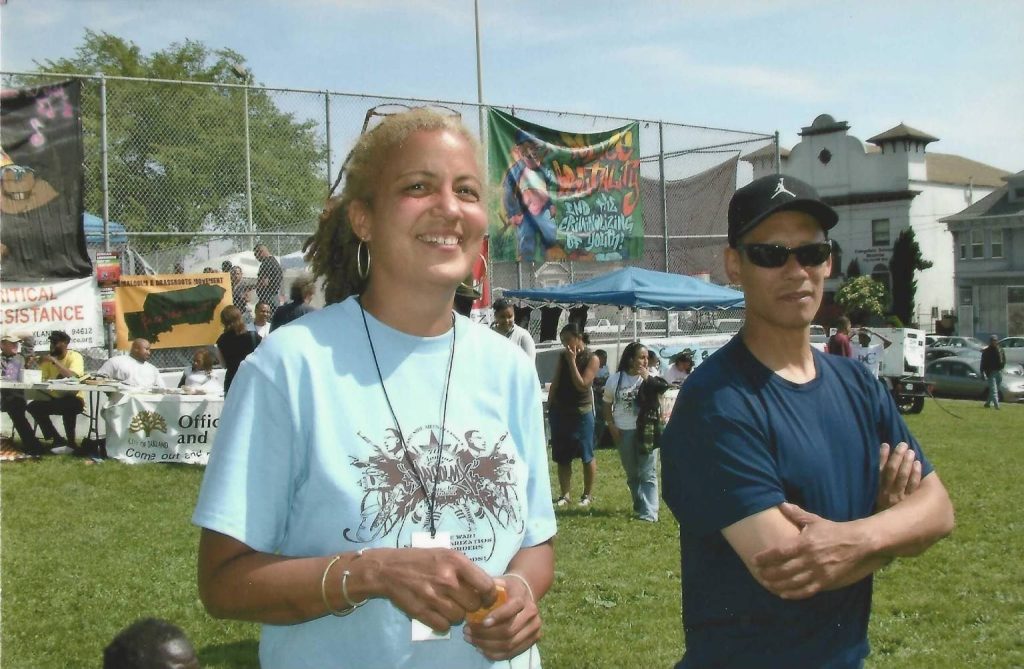
Eastside Arts Alliance, Malcolm X Jazz Arts Festival
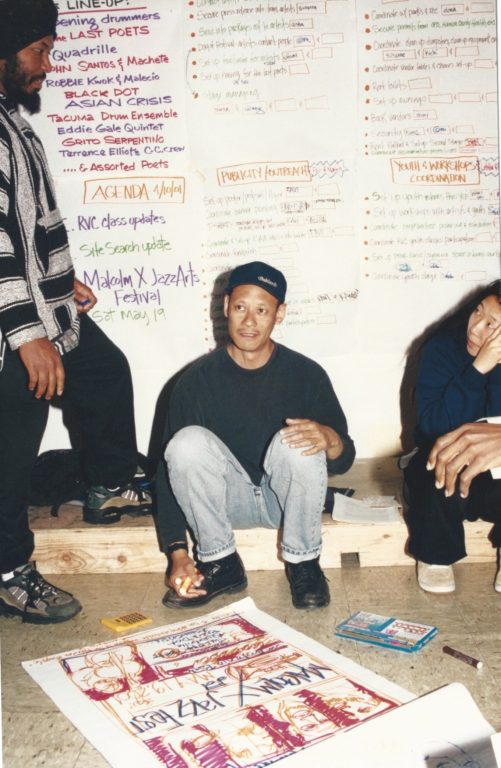
At the same time, a desire existed to establish an arts district in downtown Berkeley. La Peña sat just two blocks from the Oakland border. Morozumi thought Oakland needed a cultural space to unite arts and activism, Serrano said.
In 1999, they got a grant to host a jazz festival. Greg suggested they name it the “Malcolm X Jazz Arts Festival.” Morozumi had met Japanese-American activist Yuri Kochiyama in the 1980s, a close friend of Malcolm’s.
“He said that Malcolm had a message that communities of color have more power together than apart,” Serrano said. “Greg felt like we’re in the San Antonio neighborhood. It was Black, Asian, and Latino. ‘Malcolm said we need to come together.’” Like Malcolm, Morozumi loved jazz. For the festival, the group booked all sorts of jazz artists and Hip Hop artists that first year, Serrano said.
“Community-based arts programs should be recognized as a critical part of resistance and particularly focused on youth of color for the cultivation of creative new ideas and fresh leadership.”
Greg Morozumi, Shades of Color newsletter, 2000
They also connected with other artists groups, like Taller Sin Fronteras and the Black Dot Collective to co-found the Eastside Arts Alliance.
“Community-based arts programs should be recognized as a critical part of resistance and particularly focused on youth of color for the cultivation of creative new ideas and fresh leadership,” Morozumi said in the Shades of Color newsletter in 2000.
The Eastside Cultural Center opened in the early 2000s on International, moving to its current location at 2277 International on New Year’s Eve 2006. For nearly 20 years, the space has hosted conferences, art shows, poetry readings, and more. Year-round programming includes youth arts programs and a community space.

Exhibiting Black, Asian solidarity in Oakland
Inspired by the 1955 Bandung Conference, Morozumi remained committed to Black and Asian solidarity. In Chinatown, he began curating the Asian Resource Center Gallery in the lobby of the Asian Resource Center in 1997. Morozumi used the gallery space to not exhibit art, but raise community consciousness and connect different struggles.
His retrospectives included work on International Hotel, farmworker Philip Vera Cruz, the Chicano Arts Movement including Malacias Montoya’s work, Black Panther Emory Douglas, and Black Arts Movement founder Amiri Baraka.
“(The) subject matter for the gallery is not just “fine arts,” but also I use it to do retrospective type of archival exhibits that documents the history of our communities, the struggles that we’ve been through, and also our connections with international issues and our homelands.”
Greg Morozumi, Oakland Chinatown Oral History Project, 2009
“The exhibits that I put up in the gallery are a continuum of our consciousness back then, and is a result of a long trek that started right here in this community in Oakland, Chinatown, getting exposed to a lot of things and collecting a lot of that information,” Morozumi said. “(The) subject matter for the gallery is not just “fine arts,” but also I use it to do retrospective type of archival exhibits that documents the history of our communities, the struggles that we’ve been through, and also our connections with international issues and our homelands.”
From UC Merced back to East Oakland, Morozumi also curated exhibits and used culture to connect people. He brought folks like Amiri Baraka to Oakland. He curated Henry Raulston’s “Seize the Time” exhibition in 2015, an exhibit inspired by Bobby Seale’s book. That same year, he also curated an exhibit of Black photographers following the first Black Lives Matter uprising–which included the work of this author.
In 2017, Alameda County awarded Morozumi and Serrano the Arts Leadership Award.

Remembering Greg Morozumi
Morozumi left a larger legacy through his personality, political education, and his commitment to building institutions that connect that past to present.
“Greg is this super militant Asian dude, hella down, and loves being around Black people,” quint remembered. She grew up best friends with Serrano’s daughter, Francesca, and met him at their home. quint later volunteered for the first jazz festival and later became programs manager at Eastside. They’d talk about politics, especially political prisoner campaigns.
“He was disciplined, serious, rigorous, and he knew how to kick it,” quint said. “Funny, clear and uncompromising. One of my most prolific mentors. He gave me language to understand the role of cultural workers for revolutionary movements.” While humble, Morozumi could be stubborn at times. “He might not be around when time came to clean up, but you could call him out, challenge him, and struggle with him,” she added. “Its such a loss to lose someone like Greg, especially in this political moment.”
Serrano is still grappling with the loss of her “co-conspirator and friend.” Friends and family held a ceremony with his ashes in June. Although Morozumi had been ill and in hospice for a time, the loss still hits her every now and then. Music reminds her of Morozumi. Him playing albums at Eastside, his house, or staff retreats. Him playing Abbey Lincoln or listening to jazz at Yoshi’s in San Francisco together.
Close friends also remember Morozumi’s visual artistry. He created collages, Romare Bearden style. While he never showed his work, Serrano and quint recalled his “beautiful” sketches and notebooks. That’s why visual artists were so close to his heart, Serrano said.
The legacies of Greg Morozumi

Greg Morozumi’s work runs through the veins of numerous artists, collectives, and organizations in the Town.
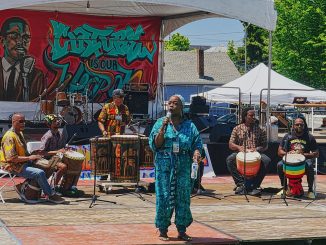
This past May, Eastside hosted the 25th annual festival. The stages and courts honor fallen comrades, with the Javad Jahi Soapbox stage, the Mike “Dream” Graffiti Court, and the Zumbi court. Eastside regularly hosts exhibits showcasing archival posters and photographs. These living memorials are also testament to the alliances and connections built by Morozumi.
Over the past few years, Eastside and other organizations have emerged that have also been influenced by Morozumi. From the Black Arts Movement District downtown, to suggesting the name for the “Black Cultural Zone,” quint said, “Greg had a foot in all these different cultural spaces,” Serrano said.
In 2019, Eastside opened the Bandung Bookstore next door. The bookstore also houses the Community Resource Archival Project. Much of the community archive of newspapers, zines, and other ephemera donated by Morozumi.
Greg Morozumi: ‘This is your history and your future’
“He was always a firm believer in looking back to know what’s happening and to look forward,” Serrano said. “Knowing these struggles and organizations and victories so we can take the movement forward. Regeneration and continuum.”
“I want to pass this history to the next generation of organizers. This is your history and your future.”
Greg Morozumi, 2019
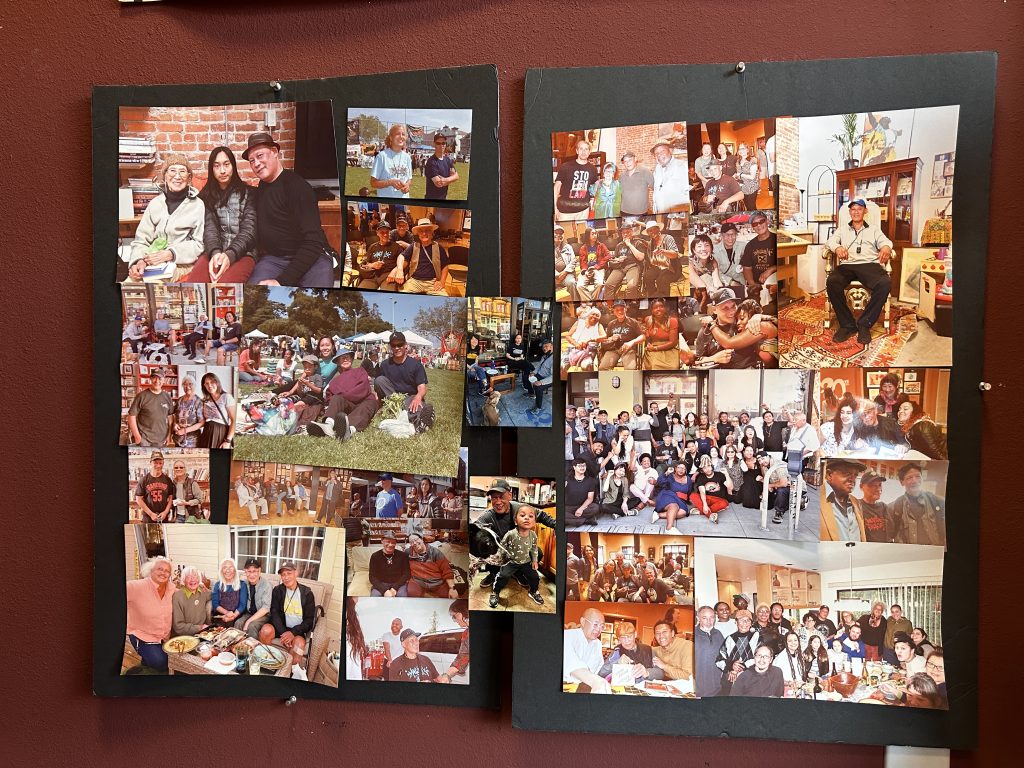
In the late summer of 2023, Eastside hosted an exhibit, “Regenerating Resistance,” an exhibition dedicated to Morozumi. In the tradition of self-publishing, Eastside also created a zine inspired by the exhibit and Morozumi’s legacy.
“I want to pass this history to the next generation of organizers,” Morozumi said in 2019. “This is your history and your future.”
In lieu of flowers, donations can be made to Eastside Alliance’s 25th anniversary campaign. Eastside is also collecting photos and statements in Morozumi’s memory. The Dia de los Muertos Block Party takes place from 2:00-6:00 p.m. on Saturday at Eastside Cultural Center, 2277 International Blvd in Oakland.
Rasheed Shabazz is a multimedia storyteller. He is a journalist, educator, urban planner, and historian. He is director of Oakland Voices' Community Journalism Program.



Be the first to comment