
For Justice: Vote Yes on 6 and No on 36
Vote Yes on Proposition 6, which ends forced labor in prisons, and No on Proposition 36, to avoid a new war on drugs.
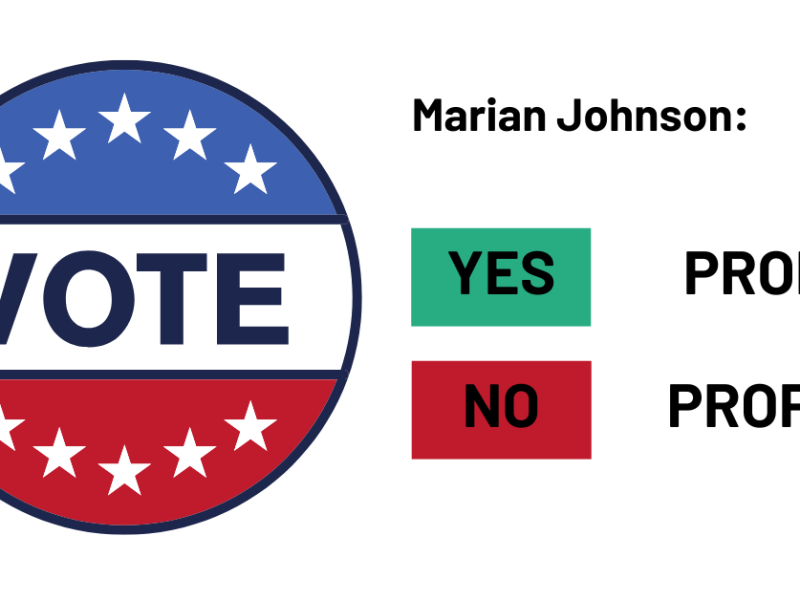
Proposition 6 and Proposition 36, which for all intents and purposes, addresses how we treat every human being who is arrested and becomes a part of the inmate population in the State of California.
The take on Proposition 6 and Proposition 36 on the 2024 California Ballot, and what I see for a community of people plagued with over policing in their neighbourhoods and the racial disparity causing black people’s incarceration rates to be pointedly higher than their counterparts.
Proposition 6 provides justice for incarcerated people
Proposition 6 changes the California Constitution which will, in effect, ban involuntary servitude/forced labor as a punishment for crime. It also bans state prisons from disciplining people who refuse to work, yet does not stop prisons from giving people time credits for working. Depending on how this is implemented, the fiscal impact, if this proposition passes, likely would not exceed tens of millions of dollars annually.
Proposition 6 is valuable and sound, and can take California in a constructive direction to provide justice to a group of people who are serving time, due to their actions that were/are not healthy for the community/society in which they lived. This proposition gives them a fair opportunity to maintain and keep in place their humanity with dignity without stripping them of their freedom of choice while they are serving their time. While they are in jail or prison, in that designated facility, where they should be given the opportunity to reform their behaviours while they are being denied access to public spaces. They are or should be doing self-evaluations, inner work, and learning new skills to do and be better as a human being before returning to their communities.
Proposition 6 addresses the exception clause of the 13th Amendment of the U.S. Constitution (“except as punishment for a crime”), which allowed incarcerated people to be used as free and forced labor paving the way for the mass incarceration primarily of Black Americans. Forced servitude should never have been nor should now be considered as a legitimate way to evaluate or measure any person’s level of reforming themselves. Involuntary and forced servitude should definitely not be used to take advantage of people confined in departments of correction, whose job it is to monitor and supervise human beings that are incarcerated in their facilities. No value can be obtained by applying any form of additional punishment for any person refusing to work while incarcerated. Additional penalties/punishments due to an inmate declining an opportunity/offer to work, provides no reasonable justification for any person who has already received their sentence from the courts.
Proposition 36 will be expensive
Propositions 36 allows felony charges and increases sentences for certain drug and theft crimes. Depending on the prosecutor, Proposition 36 states that certain drug and theft crimes could receive longer prison sentences and/or as it relates to the crime of possessing illegal drugs, the person would be required to complete treatment or serve up to three years in prison. Given the statistics of historical racial disparity it can be deduced that due to the higher incarceration rates of black people it follows that black people most likely receive to the fullest extent the most extreme of the sentencing options versus that of their counterparts.
Propositions 36 would increase state criminal justice costs in a state that’s already financially strapped. The state budget has had to cover its financial shortfall this year by withdrawing funds from the rainy day funds and other reserves including the Budget Stabilization Account (BSA), Public School System Stabilization Account (PSSSA) and depleting the Safety Net Reserve Fund.
Prop. 36 would increase state criminal justice costs in the range of tens to hundreds of millions of dollars annually, increase State prison population and increase the state, county, and local government-related workload. This alone from a financial perspective is not sustainable and will potentially cost the State more than it can realistically afford and would beyond doubt be to the detriment of California’s future budget wellness.
Why vote Yes on Prop. 6, and No on Prop. 36
Voting Yes on Proposition 6 is in the best interest of California as a morally sound choice in the direction of maintaining a healthy moral wellness related to our states’ humanity as a society without, as a bonus, incurring what would be any major financial risks or fiscal effects in implementing this proposition.
Proposition 36 due to its proposed changes and obvious historically racially-related biases that quite possibly will cause a greater impact on the black community, more than any other community, and further can cause a potentially devastating and exorbitant increase to the state criminal justice costs, I believe a No vote on Proposition 36 would serve this State well showing that careful thought and consideration has been taken to reject the proposed changes Proposition 36 would set in motion in our State. By voting No on Proposition 36 we can prevent any unnecessary blemish to befall the constructive humanity of our State.
Author
