How the 2024 election looks for one first-time voter from Oakland
Alma Collins Dumas, 18, shares her perspective of the 2024 elections as a first-time voter.
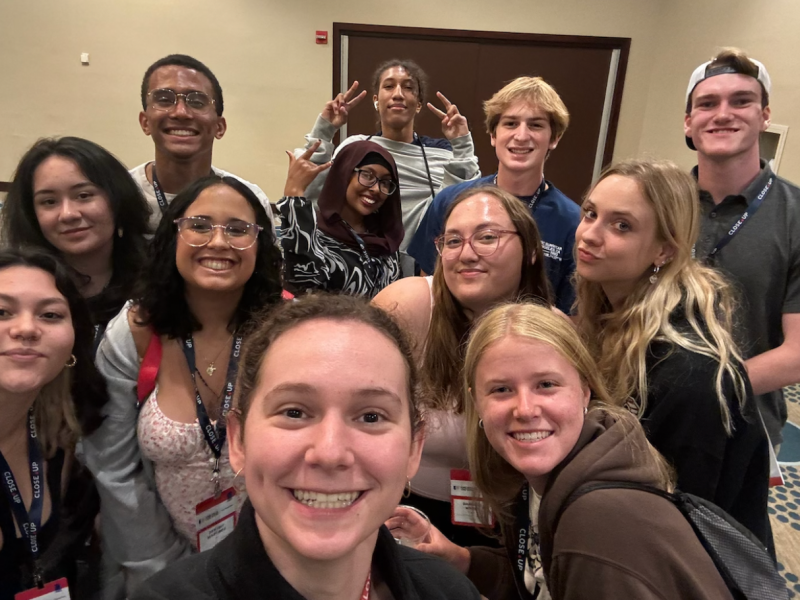
This summer, I participated in a first time-voters program for 18-year-olds called, “One Room.” The three-day program, hosted by Close Up Foundation, brought 500 of us from all 50 states to Washington D.C. for the sole purpose of discussing the election.
Before boarding the plane to the Capitol, I was convinced the trip would diminish my confidence in American democracy. Seeing the political clashes and personality contests that permeated my election-related media feed instilled a mild anxiety inside me. I wanted to learn about our government, not witness teens from opposite sides of the country yell at each other.
While getting to know my fellow first-time voters, I noticed the general sentiment that fighting was not the answer. Even when opposing political opinions arose between people, first-time voters proved to be just like me in many ways: sick of the arguing.
My anxiety and grim acceptance of that inevitable clash proved to be completely misplaced.
Over the span of those three days, I met teens from deep red states, liberal cities, farm towns, rolling suburbs, and cities like Oakland that don’t get a good reputation in the media. While getting to know my fellow first-time voters, I noticed the general sentiment that fighting was not the answer. Even when opposing political opinions arose between people, first-time voters proved to be just like me in many ways: sick of the arguing.
When I landed back in Oakland, VP Kamala Harris had replaced President Joe Biden at the top of the Democratic ticket. This change, combined with the impact of the program, gave me an admiration for our government I didn’t think was possible.
As a first-time voter, seeing at least one person under the age of 70 up for election to run our country makes me feel empowered. Even though Harris is significantly older than the 18-year-olds able to cast their votes, the shift from arguing about a doomed Biden ticket to arguing about an election that seemed close and far more tangible was exhilarating.
Gen Z: 41 million eligible voters
Gen Z has a far larger and better grip on social media than the generations preceding them. Although social media affects teen mental health, it also gives teens a platform that is interconnected with other people in similar age groups everywhere.
In the 2024 election, 41 million members of Gen Z will be legally eligible to cast their votes. Even after spending three days getting to know members of my age cohort from every state, I don’t know how many of these eligible voters will actually cast their ballot.
Even if my vote doesn’t swing the color of a state or directly determine the next president, Oakland has taught me that participating, caring about my neighbors, and spreading love past the city is just as important as making my voice heard.
My vote matters, and so does our community
Many people participating in the One Room Program felt like our votes don’t matter. I live in Oakland, California: no matter how I vote the state will go blue. Many shared that feeling that after around 18 years of seeing our home state vote for a specific party, our ballot wouldn’t do much to tip that majority or even meaningfully contribute to it.
Oakland is, in my opinion, one of the best cities to be in as a first time voter, specifically in this election. The community in this city is one that reflects a diverse care for not only the city but the people that help create it.
As I walk to the polls for the very first time, the lessons Oakland has taught me about love and community will be in the forefront of my mind. Even if my vote doesn’t swing the color of a state or directly determine the next president, Oakland has taught me that participating, caring about my neighbors, and spreading love past the city is just as important as making my voice heard.
Author
