
Oakland homelessness encampment closures doubled within last two years
Encampments have shifted towards lower-income and Black and Latino neighborhoods in East Oakland.
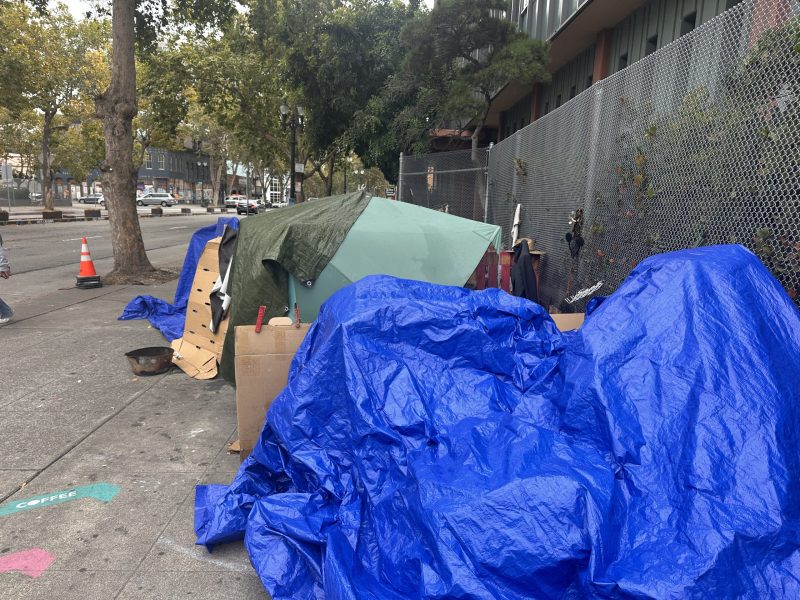
Since July 2024, Oakland has more than doubled its closure of homeless encampments, a recent study found.
Writing in the American Journal of Public Health, researchers found homeless encampment closures increased to roughly one action a day – from 14.4 closures per month to 32.2 closures — following the June 2024 U.S. Supreme Court’s ruling in City of Grants Pass v Johnson that cities can ban encampments with impunity.
The study focused on 785 encampments fully or partially closed between January 2021 and December 2024. Before the ruling, most closures clustered around Lake Merritt. But since the ruling, closures have dispersed encampments southeast toward East Oakland neighborhoods with lower household incomes and larger Black and Hispanic populations.
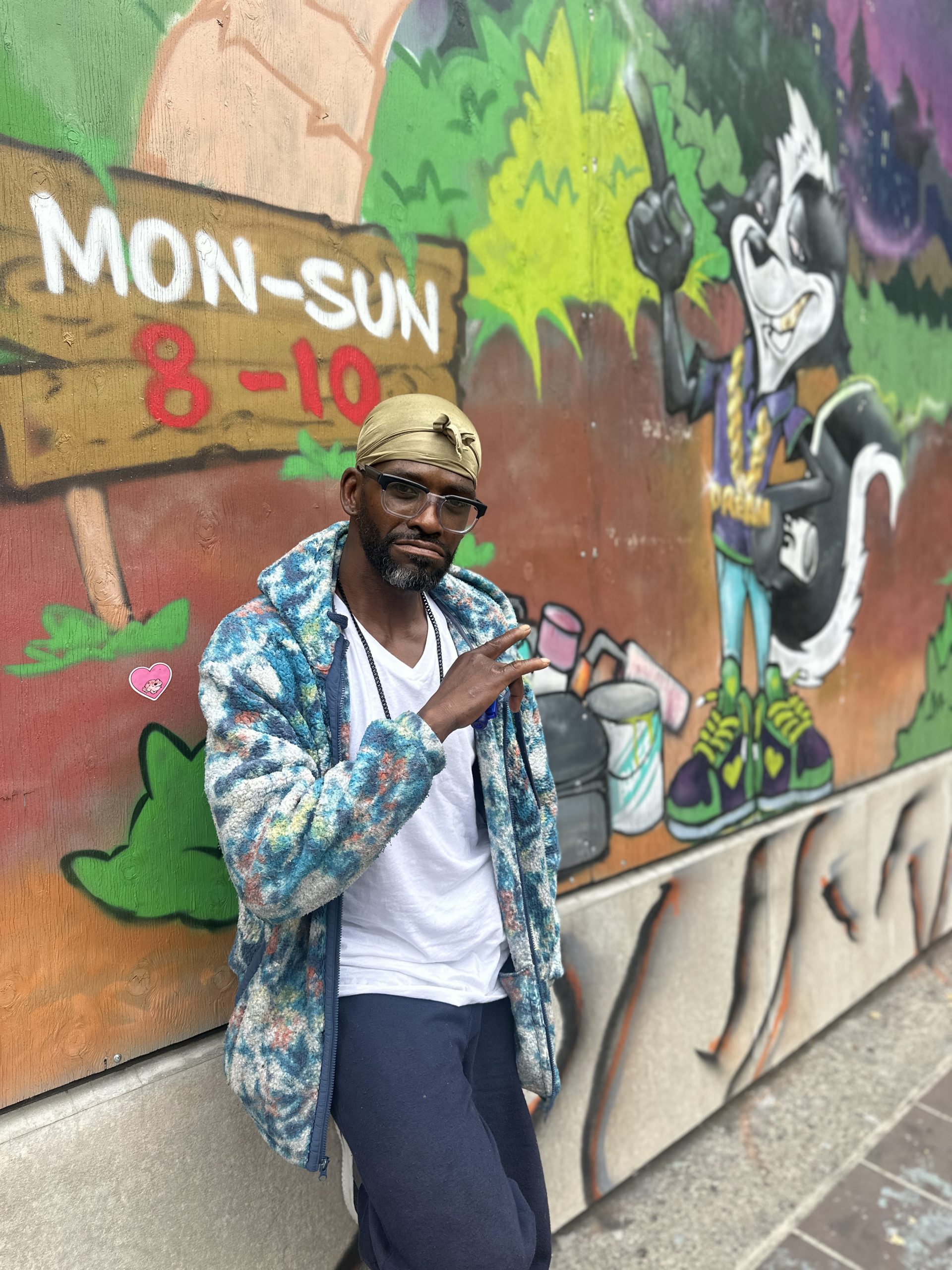
“They just take everything. Tow the cars, trailers, tear the tents down,” Johnny Prosser said. Prosser grew up in West Oakland’s Ghost Town and currently lives at an encampment on Broadway. The last closure he experienced was at West Grand Avenue and Brush Street. But the effects, he said, are devastating no matter where they happen.
“It’s like, ‘Here we go again. Back to the drawing board.’ Because you lose everything.”
Encampments have closed, but housing hasn’t opened up
Encampment organizers also say closures have become more confrontational than before.
Candice Elder said that this increased violence is not a more effective solution.
“Encampments are being closed, but people are not being put in shelters,” said Elder, the founder and executive director of the advocacy and resource distribution group East Oakland Collective (EOC). “They’re not being put in transitional housing, they’re just being further displaced to the next block, to the next street, to the next school or next home or next business. It’s not really solving anything, just making it harder on service providers like EOC to find people and to be able to help them.”
Kristen Boykin, a meal distribution associate at EOC, agreed.
“Just trying to find people has really opened my eyes to what’s actually going on in the city,” Boykin said. Boykin goes out to encampments across the city three times a week to identify individuals in need of food. As of late, she’s increasingly reconnected with people in East Oakland, miles away from where she first met them in West Oakland. “I ask them, ‘How did you get all the way here?’ And they tell me, ‘They just kept slowly pushing us in this direction.’”
The City of Oakland says the closures mostly target encampments that obstruct usage of public areas and/or pose public health concerns. While they adhere to an encampment management policy passed in 2020, Oakland’s recently-appointed Chief Homelessness Solutions Officer Cupid Alexander credits the Supreme Court ruling with “clarifying the work we need to do.”
“As a result of us being able to organize and do more, you see an increase in actions,” Alexander said. “But you’ve also seen within the City of Oakland a reduction in visible street homelessness as compared to the point-in-time count from 2024.”
Alexander also emphasizes that the city cannot forcibly remove anybody during its closure efforts. All his office can do is post notices in advance of planned closures so that people can “self-relocate,” while also offering impacted individuals alternative shelter options if space permits.
“This is a free will thing. People have to be willing to accept what we offer,” Alexander said. “Naturally, there are going to be individuals who do not want to be removed because they know the challenge of finding another space. But there’s no easy way around. There’s only a way through, and so we’re engaged in the hard work of connecting with human beings and trying to get them to their next step, whatever they’ve identified.”
‘They feel like society has given up on them’
The City used to post exhaustive closure schedules on its official website, which Alexander said no longer happens due to staff shortages. However, Elder said that this lack of transparency makes it difficult to keep track of all the encampments at risk of closure, as well as all the people at risk of being displaced.
“Because of the enclosures, we’re seeing fewer encampments, at least visibly,” Elder said. “But that doesn’t mean the people are gone. They’re just more spread out. And they’re moving into harder-to-reach places like railroad tracks, freeways and overpasses. How can we efficiently apply our services if we have to constantly work at trying to find people and see where they go?”
As a result, Boykin said, “They feel like society has given up on them.”
Author
