
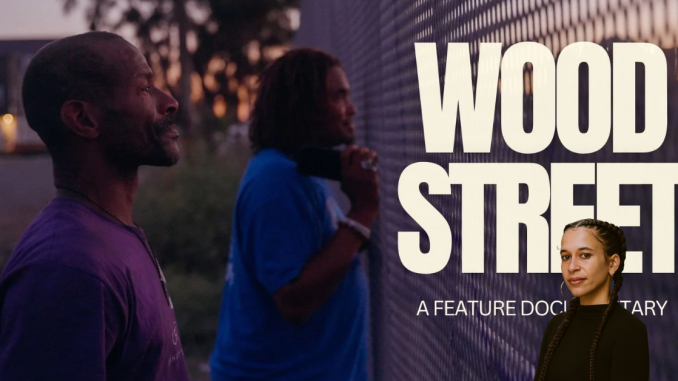
Journalism and filmmaker Caron Creighton believes that people with the lived experience of being unhoused are the real experts on homelessness.
Creighton brings this vantage point to her forthcoming documentary, “Wood Street.” For a year, she followed the lives of members of the Wood Street homeless encampment in West Oakland. Community members rallied outside City Hall and even filed a lawsuit to stop their eviction. The film is from their perspectives.
Oakland Voices spoke with Caron about homelessness, filmmaking, and what was so compelling about the Wood Street story that she quit her job to make this documentary.
Editor’s Note: The interview has been edited for brevity and clarity. Caron is raising money to bring this documentary to life through Seed & Spark.
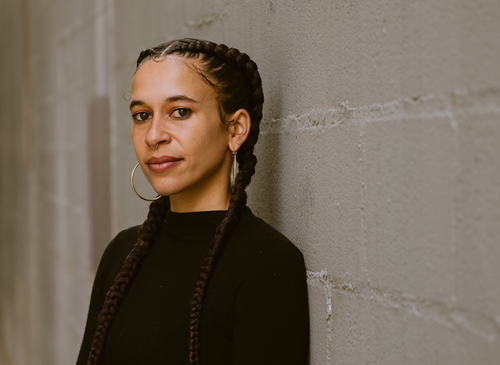
Oakland Voices: What’s your film called and what’s it about?
Caron Creighton: The film is called “Wood Street.” It follows members of Oakland’s Wood Street encampment as they fight the city and state against eviction from their long term community.
From journalism to filmmaking
How did you get started with filmmaking?
Caron: I went to grad school at UC Berkeley Journalism, studied video production there. Then I started working at the San Francisco Chronicle shortly after that, where I was working in video and podcasting. But I really just had a desire to do work on a story for longer. I was reporting on the Wood Street encampment. I did a video on them. I did a few podcast episodes on them for the Chronicle, and then they got their eviction notices in summer 2022. I was kind of feeling ready to dig into a deeper project at that point. So I left the Chronicle, bought a fancy Cinema Camera, and kind of just invested in this project. I’ve been following them and working on the film ever since.
2022. We’re kinda out of the pandemic. There’s a lot of stuff happening on planet Earth, and you quit your job, buy a camera, and start doing this documentary. What was it about what was happening that compelled you to take that risk?
Caron: I was lucky enough in the early pandemic to be working two jobs and working six days a week. I had a little bit of savings at that point. I felt a little bit more stable to be able to leave my job. I had a really supportive friend at the time who me, “This is an investment in yourself, and this is what you want to do.” It felt like a crossroads: If I don’t leave the job, I’m going to be stuck working for newspaper publication for the rest of my life. I really have to take the leap at some point. And the Wood Street story really spoke to me. It was so powerful. I met this beautiful community of people, and they were organizing. They were taking the state to court. I’d never seen homeless people taking the city or state to court before. I’m sure that’s happened before, but I hadn’t heard much about it. I felt there was a bigger story there. I was compelled enough to to take that leap.
For people who never heard of Wood Street: Where is Wood Street, and what is the Wood Street Commons?
Caron: Wood Street is a block in West Oakland, kind of the furthest west city block where people live. The encampment was kind of colloquially known as Wood Street just because of its location. It’s not just Wood Street.
Oftentimes people will name these different curbside communities or encampments, but then it’s named Wood Street Commons. So what’s what’s common or uncommon about the Wood Street Commons?
Caron: Wood Street Commons was a name given to it by the people who lived in the encampment. They really envisioned it as that is the commons. Going back in history. I don’t even know where that term originated. I’m sure they do. Before they took the city and state to court, they were already kind of developing this community that worked together and supported one another in different ways. They would get food donations, they would take clothing donations, they would do their best to collect the resources they could. They had a little bit of community leadership going, and that has since evolved a lot. The commons for them was really a gathering space.
A lot of housed neighbors had concerns and questions around like the dumping that was happening around the encampment. It was illegal dumping. People bringing box trucks and dumping trash on the street there. Two, it was kind of a combination of the city not providing them with dumpsters and trash removal on a regular basis. These people living in the encampment had nowhere to put their trash.
Caron Creighton
Encountering and countering stereotypes about unhoused people
People make a lot of different assumptions about unhoused people or people experiencing homelessness. What are some of the assumptions that, either that you may have had that have been maybe upended in this process? Or what are maybe some of the assumptions that you just continue to see about Wood Street and other unhoused folks?
Caron: I’ve worked with unhoused folks since I was 19, volunteering in soup kitchens, and I have a personal history. Not to say I didn’t have any assumptions or biases. I did learn a ton from the Wood Street community. One thing that I’ve really learned is they are the best experts on their own lives. It sounds really simple, but for me as a journalist and a filmmaker, I think it’s okay to go to these people as experts. I don’t necessarily have to go to some person who has a fancy degree to ask, “What should we do to help unhoused people?” It’s actually better to go to people who have lived experience and know what all the programs the city offers are, know what all the problems with these programs are, because they’ve been through all these programs, and they can say firsthand what did and didn’t work for them.
That’s the number one thing that I have learned, and that I try to bring into my filmmaking process as I’m going. I try my best to show scenes as I edit them with the main participants in the film. Try to get their feedback and thoughts on the process as we go, trying to involve them in my fundraising campaign. I learn so much from these people every day as I work with them. People ask me for solutions to homelessness. I don’t have the solutions, but they have a lot of ideas.
As far as biases that other folk that I’ve encountered have, the first one that comes to mind is about the visual look of Wood Street. A lot of housed neighbors had concerns and questions around like the dumping that was happening around the encampment. It was illegal dumping, which I witnessed firsthand. People bringing box trucks and dumping trash on the street there. Two, it was kind of a combination of the city not providing them with dumpsters and trash removal on a regular basis. So these people living in the encampment had nowhere to put their trash.
Another misconception is around hoarding. If you put all of the items that you have in your apartment out in front of the street and live next to it, it would look like you were hoarding too. They just don’t have a space to cover their possessions. We all have a lot of stuff. They just don’t have anywhere to really put it and make it look pretty.
Caron Creighton
Another misconception is around hoarding in encampments. Of course there are people struggling with mental health issues, and when you’re dealing with poverty and loss that’s continued, hoarding could potentially become a problem. But it’s not everyone. If you put all of the items that you have in your apartment out in front of the street and live next to it, it would look like you were hoarding too. They just don’t have a space to cover their possessions. We all have a lot of stuff. They just don’t have anywhere to really put it and make it look pretty.
Folks always ask me, “How did it feel bringing your expensive camera into this encampment?” I always say, “Wood Street was the safest place that I could honestly bring it.” At a certain point, once I had built connections and everybody kind of knew me. If I leave Wood Street, I might be worried about getting robbed somewhere else, but here, people have my back, and I felt really safe. Nothing’s perfect.
People have stereotypes about unhoused folks being scary. Since safety can be gendered, what was your experience as a woman being there, a part of this community, and telling this story?
Caron: Folks always ask me, “How did it feel bringing your expensive camera into this encampment?” I always say, “Wood Street was the safest place that I could honestly bring it.” At a certain point, once I had built connections and everybody kind of knew me. If I leave Wood Street, I might be worried about getting robbed somewhere else, but here, people have my back, and I felt really safe. Nothing’s perfect. There was the occasional person that’s passing through who might feel a little bit threatening. Maybe they have some mental health issues, but often, there were enough community friends and folks around that I would feel safe regardless. Of course, I am not the person who’s most at risk. The people at most at risk are the ones who are living there, who are living on the street. It was never really a concern for me.
Community building at a homeless encampment
People who experience homelessness for different durations of time. At Wood Street, some people lived there a long time, some passed by. You did mention earlier, sort of this community leadership structure that emerged. Tell us more about that community building and formation over time.
Caron: It’s probably similar in a lot of different encampments, but Wood Street had been there for about a decade before they were evicted. That varies. They started under the highway, that was kind of the longest portion where people had been there. Then at the lot at 1707 Wood on the physical street, people had been there a little less. The folks who were really organizing around saving their community were the people who had been there for a couple years or longer. I think in many encampments, there are people that kind of pass through, more like a traveler. They might live in a different encampment. They might be looking for a space that feels safe to them to stay. I don’t think that’s very uncommon.
On independent filmmaking and journalism
Tell us about your experience as an independent filmmaker?
Caron: I’ve definitely been learning as I go. On its face, it feels really similar to being a journalist, but when you’re undertaking a project that is so massive, it really kind of changes the stakes. I’ve learned a lot about fundraising, a lot about budgeting, a lot about storytelling and trying to tell this story in that time period. Given like the cuts we’re seeing in public media, it really has made independent filmmaking much more challenging. I’m growing to really love it. This is what I’m meant to do, but it’s not easy. It is a challenge every day.
How does the changing public public media landscape impact independent filmmakers?
Caron: PBS has an arm or a branch that just works on independent documentary. They have faced layoffs recently. There’s a lot less funding for folks. It’s already a really competitive pipeline. It’s making it more challenging. I had really big hopes of getting this film on a PBS channel. it still may be possible, but our odds are slimming every day.
Hopefully this story will still come to light in a major way. What is the difference between journalism and independent filmmaking? So for example, oftentimes journalists will not share certain material with sources prior to it being shared. But you shared that the folks in the Wood Street community have seen things as you are editing and are also involved in the fundraising.
Caron: There are limits on their capacity. They’re also organizing their own specific stuff, and for a long time they weren’t housed and stable. I’m really trying to create a process that feels collaborative and takes their feedback, but also meets them where they’re at, and is realistic. In journalism, we’re definitely taught not to share things with sources before they’re published and that’s for a lot of different reasons.
I think doing this independent project, it felt really freeing to me to be able to kind of like shift those rules a little bit, because I didn’t have a news publication behind me saying, “Do this or don’t do this.” I wouldn’t show scenes to everybody for every story that I do in the future, but for this, it really felt right. It started with me cutting scenes and just being like, “Hey, I just cut this scene with you in it. Do you want to see it? It’s really cool.” They got excited. I got excited. And then I realized this is actually really helpful to me to see how they react to it and get their feedback. I’ll show scenes to some of the main participants. They’re like, “Okay, I like this, but I want to make sure you have the context of this.” I’m like, “Yes, in the full movie, it’ll be there.” But it’s always a good reminder for me to think about those things.
It’s inspiring. It makes me wonder – while there are these reasons in journalism that we may not show certain sources a quote, because people want to edit what they say to try to look good, among the other reasons – about power dynamics and who’s telling whose story. There may be areas where those rules in journalism should be changed or modified.
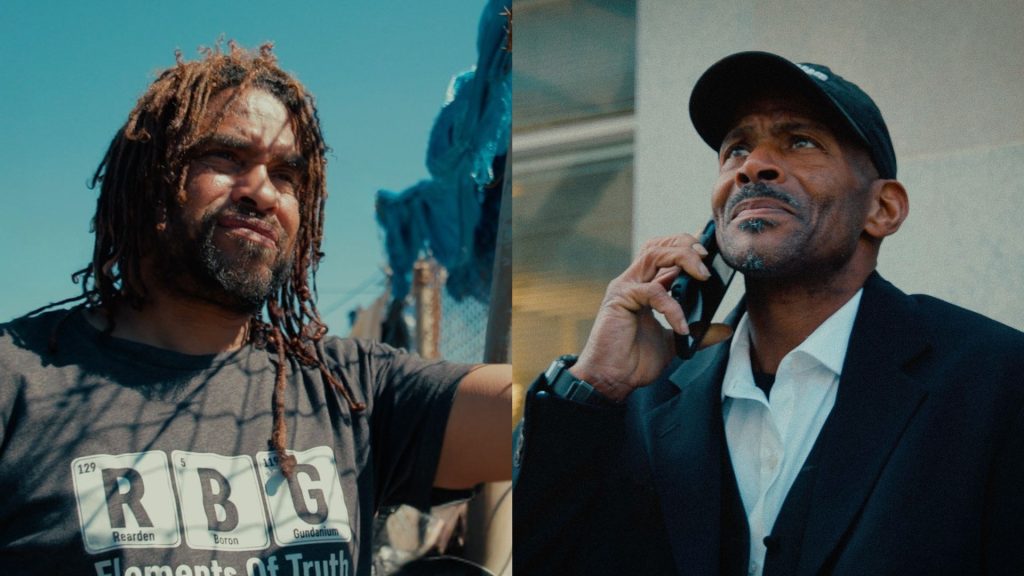
Caron: It’s especially helpful for a community that I’m not a direct member of. I’ve never been homeless. I don’t have that lived experience. It’s really important to me that I get it right, that it feels representative to them. Throughout this whole film, one of the main participants, John, has always told me, “I want the gritty stuff in there. I want people to see what it was really like.” This is also a community of people that are not self conscious about how they appear. I’ve rarely encountered someone saying, “I don’t like that shot of me. I look gross.” They do not say that. They want people to hear their story. They know it’s so important. So they’re not really focused on the superficial things.
From the perspective of unhoused people
Why is this film important for Oakland and the country and the world?
Caron: The same reason it’s important for Oakland is the same reason it’s important for the rest of the country. The Bay Area, San Francisco and Oakland, we’re kind of like on the map as this … There are a lot of negative narratives from places like Fox News around homelessness, trash, you know. It’s important to show the other side of that horrible narrative. To show why things are this way. I really hope to show the systemic issues that cause this and show it from the perspective of unhoused people. I’m not interviewing the City of Oakland for this story. It’s all from the perspective of the Wood Street community. It’s important because it’s a narrative we don’t hear very much. Rarely are unhoused people elevated as experts in their own right, on their own stories. This is unique in trying to do that. There’s so much of this footage that I have that’s through encampment evictions. I think the average person does not know how truly brutal and traumatic an encampment eviction can be. I really want to show people that. A lot of the stuff that’s happening here just serves to re-traumatize people and is not beneficial for their wellbeing. We want to get people services. There’s a way to do that without continuing to inflict trauma on them.
The Bay Area, San Francisco and Oakland, we’re kind of like on the map. There are a lot of negative narratives around homelessness, trash. It’s important to show the other side of that horrible narrative, to show why things are this way. I really hope to show the systemic issues that cause this and show it from the perspective of unhoused people. (This film is) all from the perspective of the Wood Street community. It’s important because it’s a narrative we don’t hear very much. Rarely are unhoused people elevated as experts in their own right, on their own stories.
Caron Creighton
What’s changed since the Wood Street eviction?
A lot has happened since 2022. Last year, the U.S. Supreme Court ruled that unhoused people had no right to do very basic things. There have been directives from both Governor Gavin Newsom and Oakland’s former mayor related to encampments. What’s the timeline of the filming and how, if at all, do these recent rulings and executive orders impact the Wood Street community?
Caron: The Grants Pass ruling happened after I was done filming, but I still think there’s a really direct connection with the Wood Street eviction. I followed them from roughly June or July 2022. That was when they were evicted by Caltrans, the State Transportation Agency, from under the highway. That’s kind of like the first eviction. I followed them as they were doing a bunch of activism and organizing, having meetings, taking the city to court, and doing a bunch of outreach, trying to stop the city eviction at 1707, which is kind of the end of the film.
What we see, especially in the final eviction, is just this massive use of police force against this community of unhoused people. 50 plus police were out there most days for like an 18-day eviction. We’re seeing more and more of that.
Different government agencies rationalize these sweeps or removals – there are some unhoused people who reject the idea of “sweeps” – as “We’re gonna house people.” How are people being rehoused, if they are rehoused at all?
Caron: Often it’s not a direct pathway from encampment sweep to house. Pretty much never. The city works with a service provider, Operation Dignity. They are typically the one on the ground during sweeps, and they meet with people and try to get people into shelter beds. But often the City doesn’t know which shelters are available day to day, because, of course, it changes. Often there’s not enough shelter available. And the city’s closing two shelter sites on Wood Street, so they’re gonna have less shelter available for people. They’re always moving them somewhere.
So the work area, that is presumably to protect the public works people or other people in the encampment removal operation. What’s the rationale?
Caron: Even for people like Operation Dignity and the service providers who are out there trying to give people shelter, it’s hard for them to show up with the city when the city is evicting them. Why would an unhoused person trust them? It builds a really challenging scenario for them too. From what I’ve learned over this past few years, I’m just like, if you could, maybe help people when they’re not in the process of being evicted, that would be more effective.
That makes sense. And I imagine that that came from the experts?
Caron: Yeah, it did.
‘Wood Street’ dreams
What’s next for this film?
Caron: For the film, we’re at the rough cut stage, which means, like, we’ve got kind of a big cut of the film that needs some work. I brought on a finishing editor to help us try to finish that by September, to hit the Sundance (Film Festival) deadline and all of these other film festivals. It costs a lot of money to make a film. I, as one person, can’t do it. Even though I’ve done a lot of it, I can’t do everything. We’re fundraising to cover color correction, sound design, and hire a composer.
Ideally, I would love to pay the editor, probably to keep him on a little longer. There’s endless things that need money in a film, but those are the big three to really finish it and be able to submit to festivals. And the hope is to get, like, a good festival premiere for 2026. Then we can find distribution and get the film out there so more people can see it.
When someone watches this film, what do you hope they will come away with?
Caron: If I do it right, I hope that they’ll have an understanding of all of these systemic issues that we talked about. Hopefully, we’ll be able to absorb why this doesn’t work, and hopefully dispel some of those misconceptions around things like illegal dumping and show what an encampment sweep really looks and feels like for the people who are experiencing it.
The Wood Street Community is working with an architect to try to build deeply affordable housing. They’ve formed a nonprofit. The goal is to uplift the work that they’re doing and kind of offer them a different kind of tool shift the narrative on homelessness and uplift them as experts on their own experience.
Folks interested in following your work, where do they go?
Caron:woodstreetmovie.com.
Disclosure: Oakland Voices hired Caron Creighton to produce a short film about our 2024 Academy graduation.
Rasheed Shabazz is a multimedia storyteller. He is a journalist, educator, urban planner, and historian. He is director of Oakland Voices' Community Journalism Program.



Be the first to comment