
Opinion: Muslims unite in global Ramadan observance
Fasting is one of the five pillars of Islam.
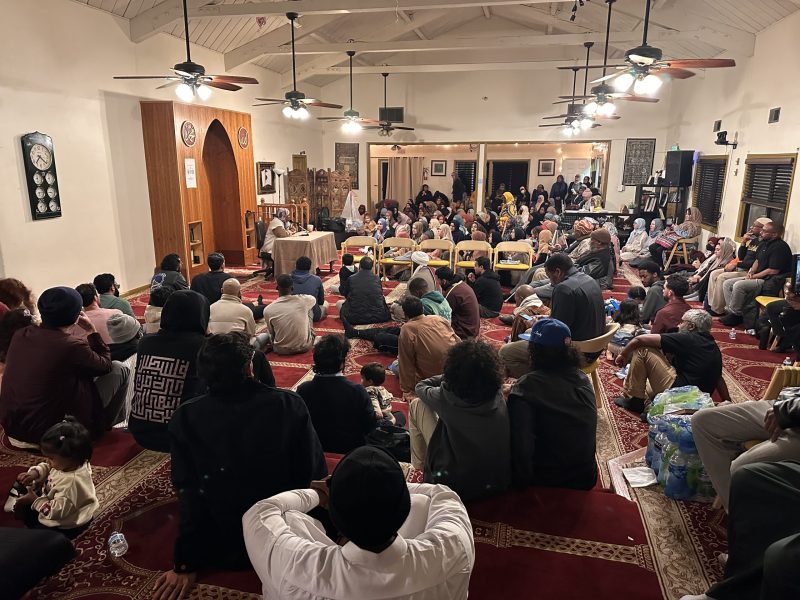
Muslims around the world began observing Ramadan in mid-February. While some communities rely on astronomical calculations and others on the naked-eye sighting of the new moon, Muslims in the Bay Area have joined more than a billion others in the month-long fast.
Ramadan (rah-mah-dawn) is the ninth month of the Islamic calendar. Muslims fast for 29 or 30 days as an act of obedience to God. Fasting, or sawm, is one of the five pillars of Islam, and is required of every able-bodied muslim who has reached puberty.
“Ramadan is the month in which the Quran was revealed as a guide for humanity with clear proofs of guidance and the decisive authority. So whoever is present this month, let them fast….”
Quran, 2:185
The Qur’an describes Ramadan as the month in which scripture was revealed as a guide for humanity.
“Ramadan is the month in which the Quran was revealed as a guide for humanity with clear proofs of guidance and the decisive authority. So whoever is present this month, let them fast….” (Quran 2:185).
Across North America and throughout the continents of Africa, Asia, South America, Antarctica, Europe, and Australia, Muslims abstain from food, water, and sexual relations during the daylight hours. The global Muslim population is estimated at nearly two billion. Whether the subtitle is Shia, Sunni, Maliki, Hanafi, Shafi, Hannibali, Salafi, Sufi, Tajani, Qadari, Chadili, or Nashbandi, or any other, fasting is obligatory for the Muslim.
“Oh believers! Fasting is prescribed for you—as it was for those before you—so perhaps you will become mindful.”
Quran, 2:183
Not all Muslims fast. There are exceptions for those who are ill or traveling, and fasting is not intended to bring harm to observers. Muslims believe fasting cultivates God consciousness. The Qur’an states, “Oh believers! Fasting is prescribed for you—as it was for those before you—so perhaps you will become mindful” (Qur’an 2:183).
The month of fasting is not entirely without food or water. Before the first prayer of the day, Fajr, fasters partake in an early morning meal called suhoor. At sunset, many break the fast with water and dates. Afterward, they perform the Maghrib prayer and eat an evening meal.
In mosques and in their homes many Muslims incorporate an extra night prayer called tarawih. This prayer is offered after the last prayer of the day, Isha, and before fajr.
Every striving Muslim is eager to participate in this blessed month seeking its many blessings.
During Ramadan, many Muslims increase charity, prayer, and other spiritually-based activities. From community iftars to Islamic-based programming, Muslim communities globally are buzzing with the spirit of Ramadan. Despite their hardships, different ideologies, and other minute differences, Muslims strive this month for one goal, the pleasure of their Creator.
Ramadan concludes with countless Eid Al-Fitr celebrations worldwide. Muslims gather for an additional morning Eid (pronounced EED) prayer, often wearing their most elegant attire, vibrant with every color you can imagine. The day includes food, gifts, children’s activities, and communities coming together to celebrate the completion of the blessed month of Ramadan.
Author

Related Articles

Opinion: Oakland must strengthen civilian oversight as federal monitoring ends
The Anti Police-Terror Project urges Oakland to strengthen independent civilian police oversight following the end of federal monitoring of OPD.