
Pierre Allison still remembers the first Alameda County Fatherhood Summit in 2019. A new dad then, he was looking for guidance after growing up without his own father. That year, he found inspiration in a poem by Prentice Powell about being a “good father.”
At this year’s summit, held Sept. 27 at the Oakland Marriott, Allison recounted that memory–as Powell happened to walk by. Allison, a social worker, stopped him to share how much the poem meant to him. Powell smiled and shared that he had recently gained custody of his own children. They embraced, celebrating their journeys.
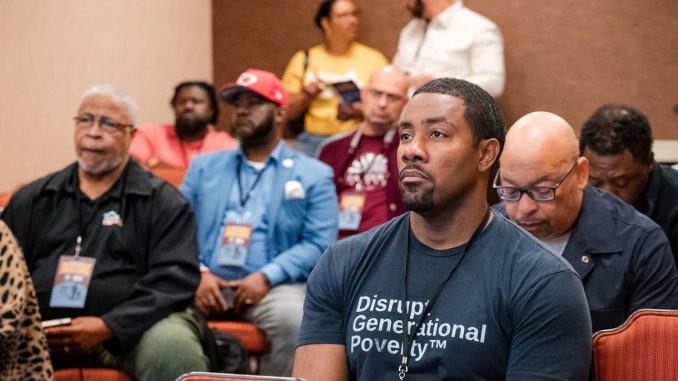
Poetic scenes like this capture the spirit of the Fatherhood Summit. Hundreds of men gathered to learn, share, and challenge stereotypes about what it means to be a father.

Fathers Corps organized the biannual summit. The event included speakers, workshops, and panels on fatherhood, wellness, and social justice. Sessions explored fathers’ roles in children’s mental health and healthy relationship building. Other sessions addressed navigating family court and knowing one’s rights in encounters with police or immigration officials.
“Fathers’ voices aren’t often heard.” Pierre Allison
For many attendees, the summit gave them a space to be heard.
“Fathers’ voices aren’t often heard,” Allison said.
Vulnerability is strength for fathers
Several speakers and participants pushed back on the idea that men must be silent to be strong. One recurring theme was “vulnerability.” Society expects men to hide their emotions rather than seek support, they said.
“That was a lie that we were sold, that we were supposed to do it alone,” said Dr. Macheo Payne, a professor of social work at Cal State East Bay. He urged men to reevaluate ideas they’ve adopted about manhood. “We have to embody vulnerability as men and we have to find ways to do that in community, with other men.”

Getting through hard conversations
One dynamic workshop focused on coparenting. In small groups and full the full room, participants spoke candidly about challenges managing stress, anger, and communication with the mothers of their children–especially after a breakup. Some said silence felt easier than confrontation.
“They say men tend to stonewall more than women because we don’t want to make it worse,” Dr. Javarte Bobino told attendees. “But we need to get through those hard conversations.”
He encouraged attendees to practice tools like “box breathing.” Setting clear goals in conversations and anticipating a coparent’s reactions can improve communication.
Changing the narrative about fatherhood
For Michael Lewis, a father of five and parent specialist with Family Paths, the summit provided resources and a new narrative about dads.
“I just love being amongst fathers, specifically because we’re often misrepresented in media, in court and legal systems,” Lewis said. “There’s a lot of bias that goes around and it’s trying to change that narrative as best as possible.”
While the summit provided resources and learning opportunities, several fathers said they came not because they were struggling, but because they wanted to support others to thrive.
“Everybody is not struggling in fatherhood,” Powell said. “Fatherhood doesn’t have to be like you’re in the trenches. Fatherhood has a lot of stigma, but it’s a lot of love.”
For Pierre Allison, that love drives his community work and keeps him coming back so he can be a better father.
Rasheed Shabazz is a multimedia storyteller. He is a journalist, educator, urban planner, and historian. He is director of Oakland Voices' Community Journalism Program.



Be the first to comment