
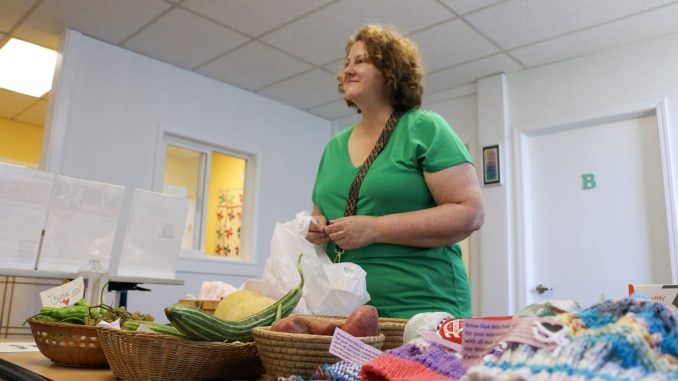
Kristy O’Brien stores resentment in her stomach.
At least, that’s what a reiki practitioner told her during a weekly care session.
“I’d been feeling a pain in my side for a while,” O’Brien said. The practitioner told her, “That’s where you hold grief and anger.”
O’Brien, 58, is one of more than 400 patients who come to Oakland from across the Bay Area to the Charlotte Maxwell Clinic (CMC), a holistic health center for low-income women with cancer.
O’Brien previously had cervical cancer in her 30s. When she was diagnosed with stage 0 breast cancer in 2024, the only advice her oncologist gave her was “Don’t stress.”
“I was like, ‘How do I do that?’” O’Brien laughed. “Believe it or not, this is the place where I can let go of stress. I feel so spoiled here.”
Starting Out: “A woman ahead of her time”
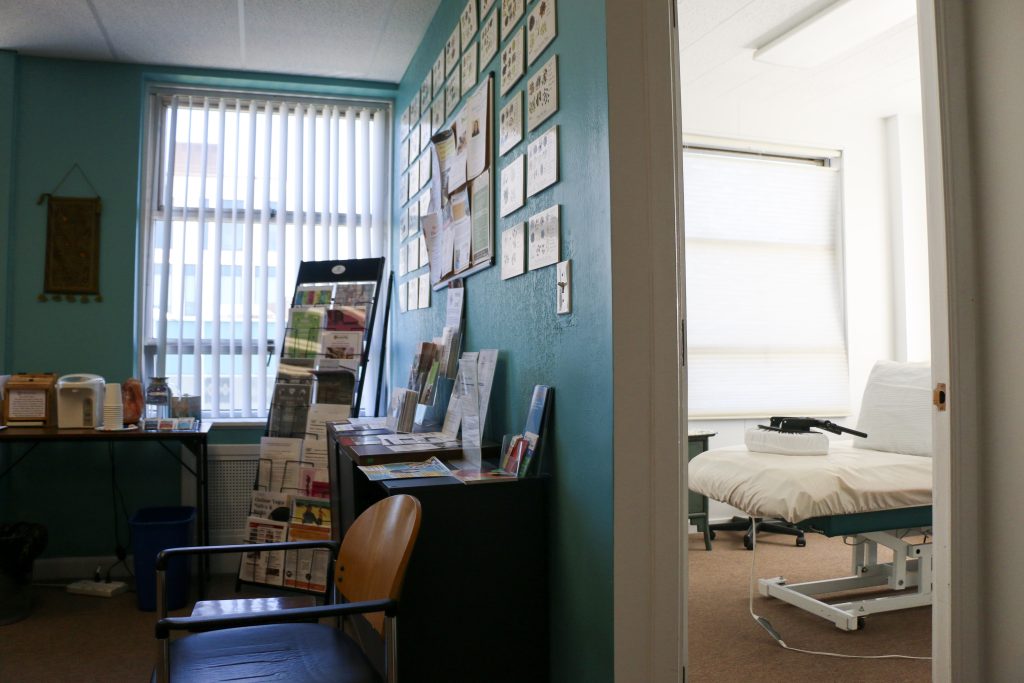
Founded in 1991, the clinic grew out of social worker Charlotte Maxwell’s experience with ovarian cancer. Exhausted by chemotherapy, she brought together a team of women who offer acupuncture, massage, herbal medicine, and other therapies to supplement her treatment. Their care was so effective that before her death in 1988 at age 56, she told her team to continue making their care available to other women with cancer, no matter their race or income.

A Health Equity Organization: “Historically, these groups have had trouble accessing care”
CMC serves women and gender-diverse people with cancer whose household incomes are no more than 350% of the federal poverty line. For example, a woman living alone would still qualify if her income was below $55,860. For a family of two, the threshold is $75,740.
“At our core, we’re a health equity organization,” clinic Executive Director Ray Rieder said. “We only work with lower-income women and people who are gender diverse because historically, these groups have had trouble accessing care.”
Lower-income people deserve to feel better and be taken care of too. Especially our clients, who are working through their cancer because they can’t afford to stop working.
Ray Rieder
CMC services are free. Holistic therapies like yoga, tai chi, or massages are not luxuries, Rieder said, they are basic self-care necessities.
“People who are lower-income don’t have enough money to access those things, and all of a sudden we call those ‘self-care necessities’ privileges,” Rieder said. “But lower-income people deserve to feel better and be taken care of too. Especially our clients, who are working through their cancer because they can’t afford to stop working.”
Donating time, food, and wisdom
Currently, 127 licensed volunteers provide services at the clinic, with each contributing at least one four-hour shift per month.
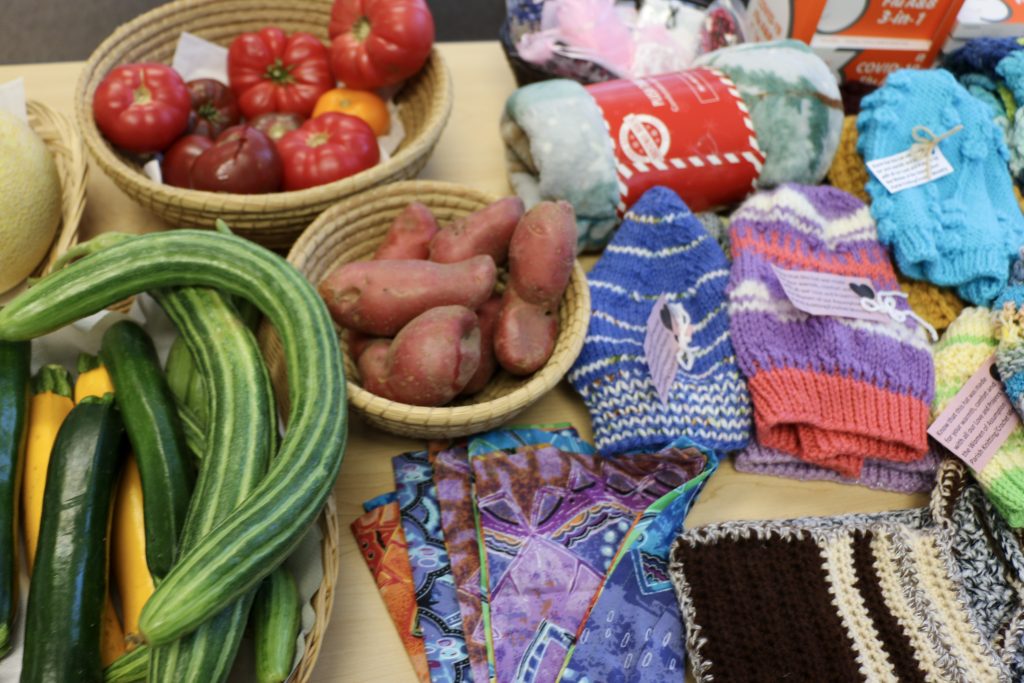
Eight paid staff members coordinate care and programming, including a take-as-needed food pantry stocked with donations from Village Market.
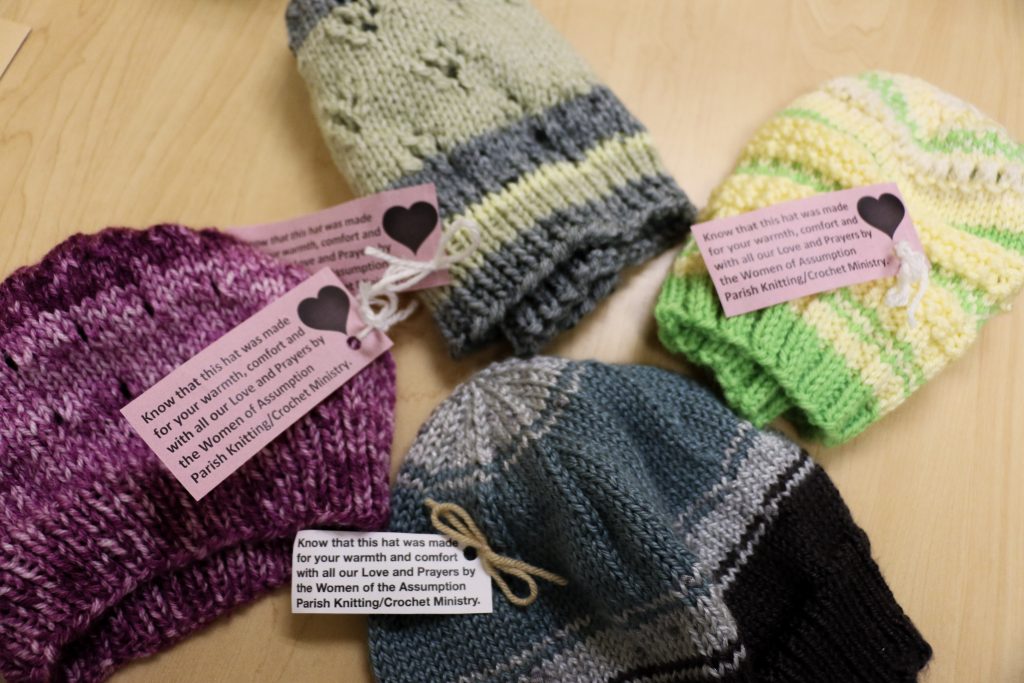
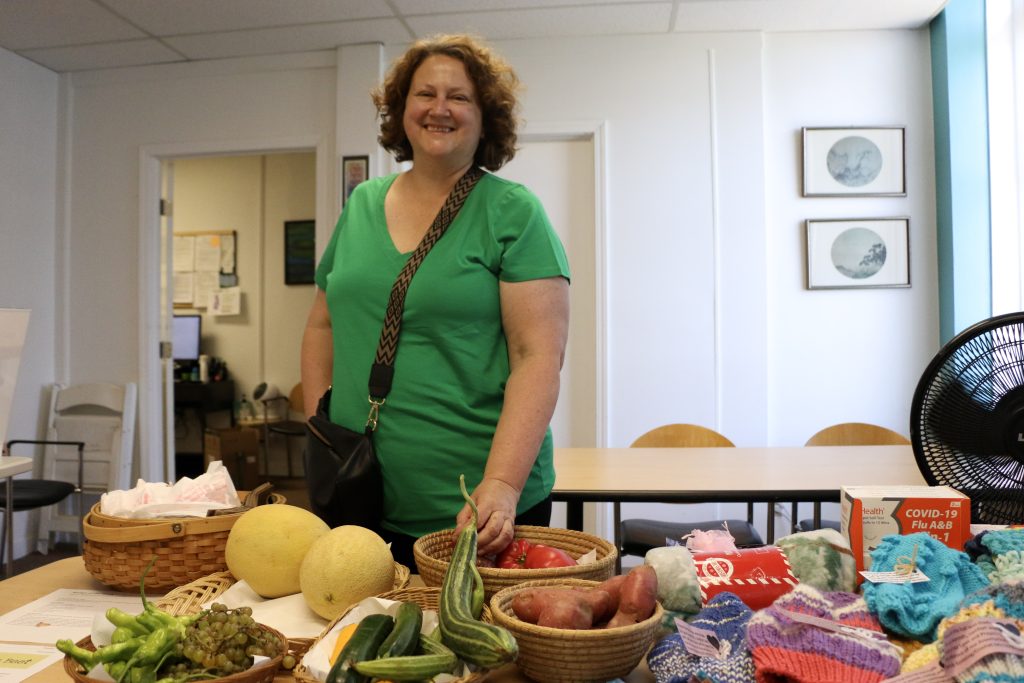
Besides food, donations include knitted beanies, homegrown produce, and medicinal mushrooms. Most of all, though, CMC relies on financial donations for its $517,000 annual revenue.
“As the funding landscape changes federally, it becomes that much harder to fund small community-based organizations like ours,” Rieder said.
It’s not a one way street where I give treatment and get nothing in return. It’s completely a two-way exchange where I receive so much in knowledge, love, and gratitude.
Sachi Enochty, CMC volunteer since 2001
CMC offers various integrative therapies, including acupuncture, energy work (such as reiki), Chinese herbs, movement therapy (such as yoga), body work (such as massages), and nutrition education. The clinic also hosts weekly wellness gatherings — such as dance classes, water color sessions, and educational workshops — where clients can decompress and learn about potential resources. All of these services are provided by volunteer practitioners, including some who’ve been with CMC for as long as 25 years, Rieder said.
Licensed acupuncturist Sachi Enochty planned to volunteer for six months. That was 2001.
Twenty-five years later, she said the connection she’s experienced with clients, volunteers, and staff keeps her around.
“It’s not a one way street where I give treatment and get nothing in return,” Enochty, 65, said. “It’s completely a two-way exchange where I receive so much in knowledge, love, and gratitude.”

“Quality of life work” that complements, not competes
CMC said its services are not a replacement for chemotherapy or other cancer treatments. Rather, its therapies are meant to help patients manage the side effects and stressors of their primary treatment plans, such as pain, nausea, and other symptoms like fatigue or stress.
“Western medicine like chemo and radiation are important because they actually kill the cancer,” Rieder said. “But during that process, nobody wants to feel terrible. Nobody wants to feel like their body is failing them.”
CMC supports “quality of life work” that complements Western medicine’s focus on “quantity of life,” Rieder said.
Indeed, clients can feel the difference. O’Brien said the discomfort in her gut subsided during the reiki session.
“The practitioner worked on it for a while, just running her palms over that area, and eventually the feeling disappeared,” O’Brien recalled. “I don’t know how it works, but if it works, it works.”
“We should be a society that wants to take care of those that are sick”
The clinic is meant to be a consistent support system for women, no matter where they are in their cancer journey, Rieder said.
“We often turn our backs on people who are older and people who are ill because we start thinking that those people are no longer ‘productive’ or ‘additive,’” Rieder said. “But getting a cancer diagnosis is one of the scariest moments. These are women who are already vulnerable, becoming even more vulnerable. That can feel super lonely and super overwhelming, and we just want to hold her and surround her with care. We should be a society that wants to take care of those that are sick.”
Currently, O’Brien’s cancer is in complete remission. Even still, she said she doesn’t plan on stopping her visits to CMC anytime soon.
“This is such a soft and gentle place,” O’Brien said as she picked through heirloom tomatoes on the donation table. “I’ve been free and clear of cancer for the last year, and that doesn’t matter to them. They said I can keep coming here as long as I need to because they just want me to feel good.”


Be the first to comment