

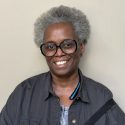
Carolyn Johnson is a long time resident of Oakland, CA. She is the daughter of Clarence and Jessie Johnson and one of five siblings, this reporter being one of those siblings.
Carolyn was raised in East Oakland graduating from Castlemont High School. She then went on to receive her bachelor’s (UCLA), master’s (UC Berkeley and Columbia University) and doctorate (Saint Mary’s College) degrees.
She is currently CEO of the Black Cultural Zone, a community development corporation and collaborative focused on East Oakland.
As a long time Oakland Resident what would you say is your fondest memory growing up in East Oakland? And why?
So many memories. The first that popped in my head was me and my brothers and sister, walking to and from Arroyo Viejo in the summertime. Going to various camps and classes and lessons, having snacks there and drinks [at Arroyo] and playing tennis. And then walking back home alone as kids. No issues. No challenges. Picking flowers from peoples’ yards for our mother. When we got home we gave them to her. So that whole experience of just a neighbourhood. Gardens that didn’t have fences and yards where you could pick the flowers was my favorite or the first memory that came to mind.
So thinking about that, after hearing about Russell City and thinking about how you landed and why you landed in East Oakland. How do you feel and what do you think about after finding the story about Russell City?
I was shocked. We knew something happened in Russell City, but it was never fully explained.
My grandparents and great grandparents and mom and dad never told us the details. It was so horrendous that they probably never felt it would ever come to light and they couldn’t speak of it. I didn’t know of them burning down homes and the forced displacement and substandard (payment) rates, if any
And it was surprising to hear. It was saddening to hear. It was more of “This is America. This is what they do.” Instead of being hopeful that this country hadn’t been the worst it could ever be, it was confirmed that the worst is really true. This country was really built on a lot of awful things. It was kind of a confirmation. That in and of itself was sad.
What was your motivation to take the position as CEO for the Black Cultural Zone?
Well my first was as the Executive Director of the Collaborative East Oakland Black Cultural Zone Collaborative and that eventually did say that they wanted to have the CDC.
What does CDC stand for?
Community Development Corporation. BCZ is three things. Geography, High Street to City of San Leandro, Hills hills to the water. It’s a collaborative. And it’s a community development corporation. So I took the job as Executive Director of the collaborative because they were looking for someone. I thought I had a skill set to help these more artist non-profit groups develop property. It was a place near our house were I grew up that they were looking at, 8525 International. If I didn’t take (the position), they may not have been able to find a person, a Black person, which was not going to be ok.
Is the BCZ what you thought it would be or is it close to becoming?
I thought it would be a simpler thing. A development of a property. But very soon thereafter I realized it was a movement and not just a project. I think the BCZ is definitely on its way to what I imagined it could be. I think it’s what I imagined I have not shared fully with people because its ginormous. I think we have to double down, triple down, quadruple down, and go for it. BCZ is a vehicle for our people to get true liberation.
What do you find challenging and why? And this doesn’t have to just necessarily be just BCZ but in life or whatever – what are the challenges for you as a human being?
Managing the health, the rigors of daily adult life and the responsibilities, the demands of the work and the movement I’m in. Balancing time with family and just keeping it all balanced. It’s very challenging and something has to give always.

Marian and Carolyn, we have very common interests. Having also attended Castlemont ‘75, I am post retirement, Alameda County Judicial System, I am a community activist in the areas of re entry and workforce development.