

Oakland-based Flipcause calls itself, “the best fundraising software for nonprofits.” But dozens of nonprofits nationwide say the tech company has withheld hundreds of thousands of dollars, in some cases for months or years.
The delays have led to missed payrolls, staff layoffs, canceled programs, and rising anxiety for nonprofit leaders already struggling to fill gaps in the wake of local and federal government budget cuts.
Some organizations have broken ties with Flipcause, while others still await long-promised “pending” funds.
“It’s a constant fight to get the money. I have to fight for each transfer.”
East Oakland Collective (EOC), which runs food pantries, senior wellness programs, and services for unhoused residents, is owed more than $100,000.
Other nonprofits report similar challenges: “pending” fund transfers, unanswered emails, and deep frustration with a donation platform they once found useful.
“It’s a constant fight to get the money. I have to fight for each transfer,” EOC Executive Director Candice Elder said.
In an email this summer, Flipcause CEO Sean Wheeler said that fixing the transfer process has been his top priority. He promised both short-term fixes and a permanent solution.
Wheeler did not respond to multiple emails and calls from Oakland Voices seeking comment.
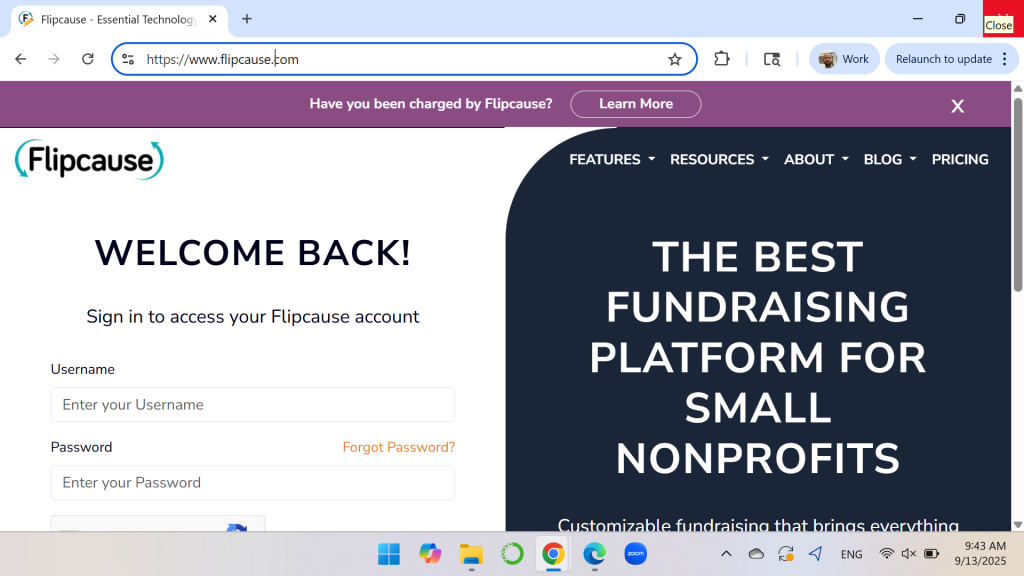
Flipcause: The promise of an all-in-one fundraising platform
Founded in 2012, Flipcause started as a simple fundraising widget before expanding into a range of tools for small nonprofits. Flipcause became a one-stop platform where groups could manage donors, register event attendees, recruit volunteers, sell products with an online store, and accept donations – all while charging a lower fee than donation platform competitors.
Unlike larger donor management systems that take bigger cuts of donations, Flipcause capped its fee at 1.5 percent. With a centralized dashboard for data and services, Flipcause branded itself as a cost-effective alternative for organizations without big budgets or tech teams. On Linkedin, co-founder Emerson Rayvn claims more than 10,000 nonprofits have used Flipcause.
‘It’s not sustainable’: Delayed funding transfers frustrate services
That promise to ease operations began to unravel for some organizations in recent years. EOC first started using Flipcause about six years ago to support its grassroots fundraising. Their fiscal sponsor at the time, Social Good Fund, Inc., had an account. Elder didn’t notice any problems. When EOC incorporated in 2023 and opened its own account, issues arose.
Transfer requests that once took just two or three days went unanswered for months, despite multiple emails.
“For about six months, we were being ignored,” she said. “It’s not sustainable to have to wait six months for each request.”
Elder went public June 6 with her frustrations. She tagged Flipcause on Facebook and Linkedin posts.
Three days after her public criticism, Wheeler emailed her and promised that he would expedite a $34,185 pending transfer and credit EOC with a one-year subscription.
Elder received those funds soon after, and also quickly learned that she was not alone.
‘This is not an isolated event’: Growing list of nonprofits complain
“When Candice dropped her post, I thought, ‘This is not an isolated event,’” said Mark Gaskins, founder of The Village Method, a youth development organization serving youth and families in southern Alameda County.
“The platform grabbed my heart for [its low fees], and because it’s in the Town. Why wouldn’t I want to support this business in the Town?”
Mark Gaskins, Executive Director, The Village Method
Gaskins initially praised Flipcause’s low fees and Oakland connection. “The platform grabbed my heart for that reason, and because it’s in the Town,” Gaskins said. “Why wouldn’t I want to support this business in the Town?”
But those delays that he first noticed, but brushed off, about two years ago, grew longer.
“It wasn’t until Candice Elder posted that I went to check,” he said. “There it was, pending, $7,500. It was in the ‘pending’ status for two months.”
Most of his organization’s funds come from philanthropy and service fees from school districts. With the current federal administration’s attack on diversity, inclusion, and equity programs, his organization increasingly looks to donors for support.
For The Village Method, the withheld donation money meant canceling summer programs.
“Families don’t have afterschool programs without the Village Method,” Gaskins said. “We provide healthy meals and snacks. The school didn’t pay us for that. That comes from the donation money.”
‘Time-consuming and frustrating’: Why nonprofits leave Flipcause
Other groups have already cut ties with Flipcause.
“Honestly…run. But if you’re stuck with them for any reason, I recommend being persistent and specific in your communication. Ask clear questions, get everything in writing, and hold them accountable to their stated processes. Documentation is key.”
Rashida Hanif, Executive Director, RepresentEd Leadership
RepresentEd Leadership has supported more than 4,000 emerging leaders since 2017. The Oakland-based workforce development nonprofit used Flipcause from 2019 to 2025. The platform served its basic needs at first, but the organization stopped using Flipcause due to pricing concerns and issues with donation processing.
Last September, RepresentEd Leadership used Flipcause to fundraise for its inaugural gala, “In Full Bloom.” Flipcause withheld donations “for what felt like arbitrary periods, ranging from two to six weeks,” Executive Director Rashida Hanif said, disrupting her organization’s cash flow and operations.
Flipcause required her organization to go through what it called a “compliance” process for large donations. Hanif sent multiple emails before Flipcause finally released the funds.
“The time-consuming and frustrating process eroded our confidence in the platform,” she said. RepresentEd has since switched to a competitor, Givebutter.
Hanif advises other nonprofits to do the same.
“Honestly, run,” Hanif advised. “But if you’re stuck with them for any reason, I recommend being persistent and specific in your communication. Ask clear questions, get everything in writing, and hold them accountable to their stated processes. Documentation is key.”
When fund transfers delayed, communities pay
The delays come at a difficult time as under-resourced organizations scramble to fill widening gaps in the public safety net. Without money, these nonprofits cannot provide service or support for unhoused, unemployed, and low-income communities, leaders said.
East Oakland Collective serves more than 200 families weekly through its pantry, senior wellness programs, and events like Feed the Hood. EOC dipped into its reserve to keep its programs afloat, Elder said.
“We are spending our reserves to keep operations going. Just hoping and praying we will get reimbursed.”
Candice Elder, Executive Director, East Oakland Collective
“We are spending our reserves to keep operations going,” Elder said. “Just hoping and praying we will get reimbursed.”
Besides cancelling summer programs, The Village Method laid off staff and Gaskins took a pay cut. “Flipcause is connected to that,” he said. “That $7,500 could’ve helped us bridge operations through the summer.”
Gaskins added, “It’s the straw that broke the camel’s back.”
Mounting complaints against Oakland tech company
The number of complaints nationwide filed against Flipcause with the Better Business Bureau has risen from about 56 in June to a current total 88. On Yelp, 12 of the 13 reviews posted this year gave the company a single star. On Google Reviews, users also cite delayed transfers and poor communication.
Since calling and emailing Flipcause has been ineffective, a few have tried visiting their offices in Jack London Square for answers.
Oakland Voices visited their offices too, but no one was there.
So where is the money? And what is going on? It’s unclear if Flipcause is ineffective, inefficient, or insolvent.
Some frustrated nonprofit leaders have apparently turned to local authorities. Neither the Alameda County District Attorney’s Office nor the DA’s Consumer, Environmental, & Worker Protection division responded to a request to confirm if an investigation is underway.
Searching for alternatives, demanding answers
Meanwhile, competitors like Givebutter, Bonterra, and Donorbox have seized the moment and have advertised their products to frustrated nonprofits seeking alternatives to Flipcause.
A few reached out directly to Elder. She plans to leave Flipcause, but worries that East Oakland Collective may lose donors during the switch to a new platform. Plus, since going public, the total Flipcause donations accrued and owed to EOC reached over $120,000. The whole ordeal has left her both cautious and determined when considering new fundraising platforms.
Flipcause’s actions, Elder said, make it hard to “make payroll, keep the lights on, buy food, (and) feed the unhoused.”




Be the first to comment