
As the child, Meres-Sia Gabriel remembers her parents told her to never tell anyone that they had been members of the Black Panther Party. At times, she felt as if part of her life disappeared.
Gabriel’s understanding of her place in the Black Power Movement took years to process. After years of living in the shadows of shame and secrecy, Gabriel, 51, finally embraced her artistic gifts and now shares her story with the world.
The early life of a Black Panther ‘cub’
The Black Panther Party for Self-Defense was a revolutionary organization founded in Oakland, California in October 1966. Gabriel’s parents joined in its early years of its inception.
Gabriel was born Cyndi Douglas in 1974. Her father, Emory Douglas, is the former Minister of Culture, and created iconic artwork in the Black Panther newspaper. Her mother, artist Gayle “Asali” Dickson, was a pre-school art teacher and primary female artist for the newspaper in its early years.
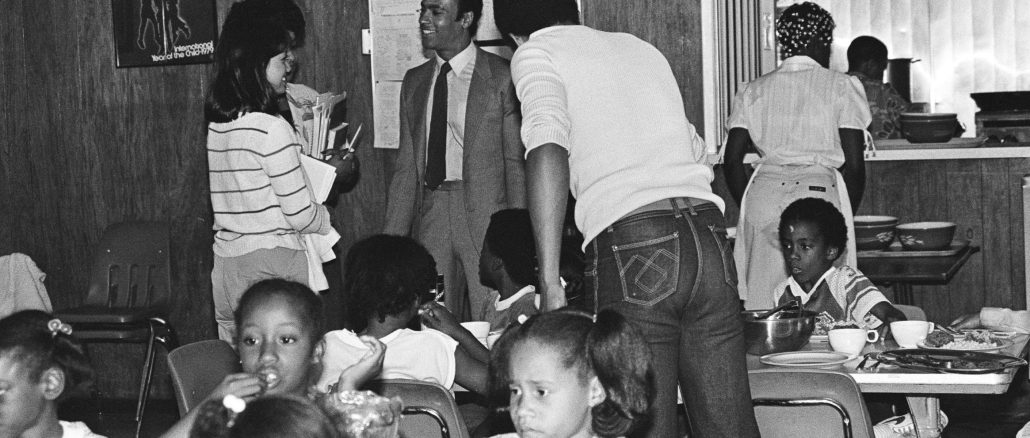
Gabriel attended the Oakland Community School, the Black Panther’s school for Black and low-income children founded in 1973. She fondly remembers her time at the school on East 14th Street (now International Blvd) as nurturing and joyful.
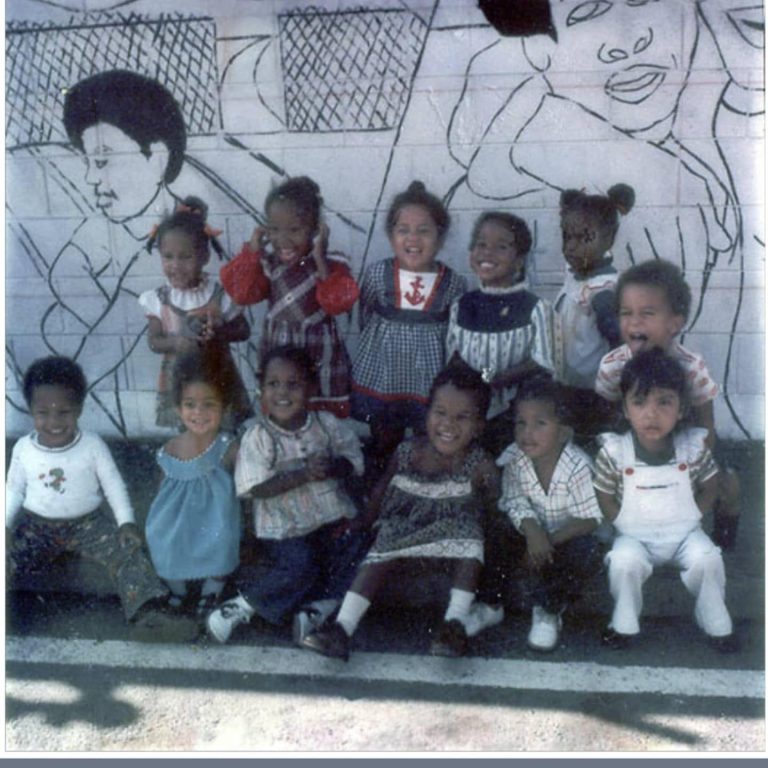
“I look at the pictures back then and I was happy,” Gabriel said. “I was in a loving community, and I was with my favorite cousins, and my older brother was there too. I remember my teacher teaching me how to spell and recognize my name.”
Another endearing memory of Gabriel’s childhood that remained with her was the manner in which the adults in her life greeted each other. “They called each other, ‘Hey Soul Brother. Hey Soul Sister,” she recalled while smiling.
But the good times didn’t last.
When parents and Panthers break up
Dickson left the Party in 1976, she was tired, bitter, and disenchanted. An incident involving property she had acquired in Seattle, Washington with her former husband, Melvin Douglas when they were both members of the BPP chapter, appeared to be the catalyst for her break with the Party.
Gabriel’s mom had limited contact with other Panthers after she left the party. But her daughter still needed childcare, so Gabriel continued attending the Oakland Community School’s preschool program. Gabriel also attended summer programs there during elementary school.
“After the Party dissolved, my parents were dealing with their own issues related to survival and I would imagine, a form of grief … from the Party ending and the trauma of trying to survive in a capitalist society.
Meres-Sia Gabriel
Her grandmother, Madeline Stowers, respected the Party and its goal, but when she became aware of her granddaughter being in 24-hour daycare, she conveyed her concerns to Dickson, her daughter. Stowers then became more involved in her granddaughter’s day-to-day care.
Gabriel’s father remained with the Party until it disbanded in 1982, but he did not talk much about the Party to his daughter.
“After the Party dissolved, my parents were dealing with their own issues related to survival and I would imagine, a form of grief, although they’ve never said that,” Gabriel said. “Grief from the Party ending, the life they knew for so long, gone, and the trauma of trying to survive in a capitalist society.”
“They remained in their own respective internal worlds leaving me to figure things out emotionally on my own,” she said. “That feels like abandonment to a child.”
From Cyndi, to Cell Dwella, to Meres-Sia
Gabriel developed her artistic talents early and displayed them through music and writing. As she grew up, she became a serious lyricist and poet, and she wrote music. She found her voice in 1990s Hip Hop. In high school, she joined a rap group called “Cell Dwellaz,” which included members, the Last Emperor, the Renegade Lord SJ, and Quame “DJ Quame Allah” Patton.
It wasn’t until she left for college at Howard University in Washington D.C., that she felt safe sharing that her parents were Black Panthers.
Gabriel changed her name in the early 2000s. Meres means beloved. Sia means one with insight (Ancient Egyptian origin). She became a well-known author-poet in the Bay Area while she pursued a career in education.
People often asked Gabriel to write a book about growing up in the Black Panther Party, but she could never figure out how to tell her story. In 2023, she received a California Arts Council grant based on a poem which captured the emotional experience of her Black Panther childhood. That poem became the basis for creating her one-woman show which she wrote, produced, and debuted last August.
‘I Was There Too’: A multimedia performance, show


“I Was There Too” is a multimedia spoken word and musical performance about one woman’s inner revolution. She shares her struggle to understand what it means to be a “Panther Cub,” a moniker given to children of Black Panther Party members.
On Sunday, July 20, Gabriel mesmerized the audience at the Oakland Museum’s James Moore Theater. Wearing a monochromatic black blouse and pantset, she sang, rapped, recited poetry, and dramatized monologues. A jazz and blues trio accompanied her. The melodies added to the personal narratives, family photographs, and archived documents displayed throughout the show. This is a story sharing the sights and sounds of a woman who is finally telling her story in her own words.
The audience learns that, as a child, Gabriel was unaware of her parents’ roles, talents, and the impacts they made in the party. During research, she learned her mother designed the Oakland Community School’s logo. And it wasn’t until she was a Howard University college exchange student in France in the 1990s that she happened to see her father on the television being interviewed as the Minister of Culture.
Gabriel gives homage to young Panther members like Cynthia (Cyndi) Smallwood, whom she was named after, and Lil Bobby Hutton, the first martyr of the party.
Dramatizing Hutton’s 1967 death, Gabriel said, ““Why did they send me outside to face the police? I was only seventeen years old!”
The show debuted August 9, 2024 at the Airship Laboratories in Richmond. She also performed at the Yerba Buena Center for the Arts in the City.

Minister of Culture Emory Douglas was in attendance at the first show and the most recent show on July 20.
“I am very proud of my daughter for telling her story and how the show has evolved,” Douglas said.
“At some point a child grows up and is no longer identified in relation to the parent. We are adults who had our own identity and experiences in the Party. During the movement, we didn’t have a story to tell because we didn’t have the experiences of our parents.”
Meres-Sia Gabriel
Embracing the Black Panther ‘Cub’ identity
Gabriel initially had mixed feelings about being called a Panther “Cub.”
“At some point a child grows up and is no longer identified in relation to the parent. We are adults who had our own identity and experiences in the Party,” Gabriel said “During the movement, we didn’t have a story to tell because we didn’t have the experiences of our parents.”
But she has come to accept the moniker. “I have struggled with the term and feel it is something Cubs can answer for themselves. I recently came to terms of acceptance.”

New legacies, new stories
Many Panther Cubs continue the legacy of activism and service. Meres-Sia Gabriel’s stamp on her legacy continues as an educator. She spent the last twenty years teaching in alternative high school programs, ministering to students who may need guidance in pursuing their goals.
She’s also more forthcoming with her own daughter.
Isandla Blanc, Gabriel’s daughter, served as production assistant for the show, and knows her mother’s story.
“I want to contribute but it is a lot to bear; I don’t want to carry such a heavy load. I want to contribute in my own way, in my own time.”
Isandla Blanc, daughter of Panther Cub Meres-Sia Gabriel
“My mother told me everything that was relayed in the show. I also attended Panther reunion events with my mother and grandfather including the 50th anniversary in 2016,” Blanc said.
Her mother’s experiences validated Blanc’s feelings and pride about history beyond what she learned in school and inspired her to find her unique way to continue the Black freedom struggle.
“I want to contribute but it is a lot to bear; I don’t want to carry such a heavy load,” Blanc said “I want to contribute in my own way, in my own time.”
This story is funded by a grant from the East Bay Fund for Artists 2 at the East Bay Community Foundation.
Be the first to comment