
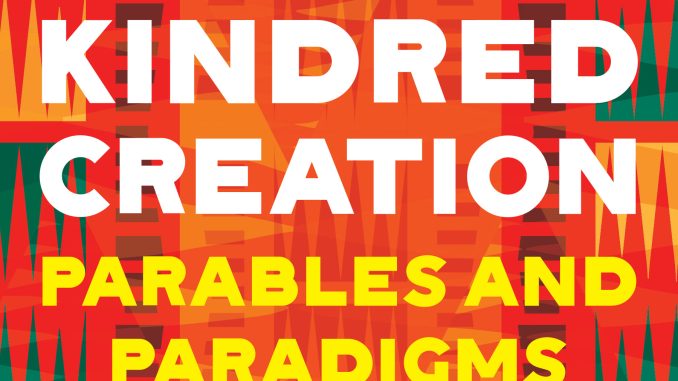

Editor’s note: When Aida Mariam Davis moved to Oakland after attending UC Berkeley, she dedicated her life to activism. She shared the following excerpt of her book, “Kindred Creation” with Oakland Voices. This Thursday, February 27, she’ll discuss her book at UC Berkeley and at the Youth Power Zone at Fruitvale Station.
My elders tell stories to share supernatural wisdom. They spoke to me in a dream and shared the testimony of the mimosa tree:
Torrential rains are common this time of year. Springtime represents the renewal and rebirth of all beings, especially trees. Acacias gossip and giggle with the baobabs, sharing the talk of the village. Meanwhile, the wispy flowering magenta mimosa tree sings songs of struggle and joy every morning, rain or shine.
Pregnant with the possibility of the generations of trees to follow, the mimosa gleefully greets every child who passes as she knows they will one day inherit her. She is a part of an above-ground tribe of sun-loving trees that speaks their minds and keeps the sacred village stories. Her daily labor is valued by the village people. She, along with the other trees and organisms, is a part of an underground network that labors together to replenish and regenerate the Earth.
Once, years ago, visitors came to the village. Their essence was very strange: they never spoke to the trees or plants, they built their own homes where village huts stood, and they brought fire to the ground. Those visitors ignored, even attempted to destroy, the mimosa tree’s beauty and her ability to offer songs, shade, and sustenance to the community. Much of the damage caused by the visitors was visible, but there was also damage that was invisible. To repair and restore herself, she replanted.
Despite that scarring encounter, the mimosa is surprised to learn that the ground is actually more fertile after a fire and that she remains unchanged in her divine purpose—to bloom. She plans to share this lesson, along with many others, with every seed she produces for generations to come.
Rooted in deep and sororal kinship, trees reveal our deepest truths about living fully and freely. For millennia, African and other Indigenous cultures have acknowledged and been in awe of the way trees change, connect, and communicate. Trees, like all organisms, live, breathe, speak, and self-organize. They live with their dead: the outer sections of the tree are alive with cells transporting water and sugar, but the core of the trunk is dead. Particular trees, like the baobab, possess spirits that are powerful forces to guide decision-making. This understanding and reverence for trees is in stark contrast to settler logic.
Until recently, Western scientists claimed that trees and other plants could not communicate because they did not possess the same speaking faculties as humans or other animals. Scientists only understood the potential for plants to communicate purely through the lens of human capacity. Their reluctance to explore the intricate nature of trees demonstrates, on one hand, a kind of human superiority to all other organisms and, on the other, a lack of curiosity or interest in learning from other cultures. Western scientists’ recent “discovery” that trees communicate has been hailed as a revolution of scientific understanding. This pattern of the powerful asserting themselves as the sole authority and arbiter of what is “real,” while denying the decades of Indigenous wisdom is desecration. This “revelation” demonstrates a refusal to engage or acknowledge the past and present experience of interconnectedness as told by Indigenous peoples around the world.
Trees, flowers, and gardens offer us beauty and complexity that give meaning to our lives, but more importantly, these nonhuman kin give us breathing space to experience grace, the unmerited favor from the divine. As we travel together, narrator and reader, let us not follow the path of the sanctimonious scientist and dismiss ancestral wisdom. Instead, let us be reminded of the role and responsibility we have to steward the land, recall and realize the language of those who’ve come before, and recognize the interconnected nature of our lifestyle. With this awareness, we can create with intention and care for generations to come.
Excerpted from: Kindred Creation: Parables and Paradigms for Freedom by Aida Mariam Davis, published by North Atlantic Books, copyright © 2024. Reprinted by permission of publisher.
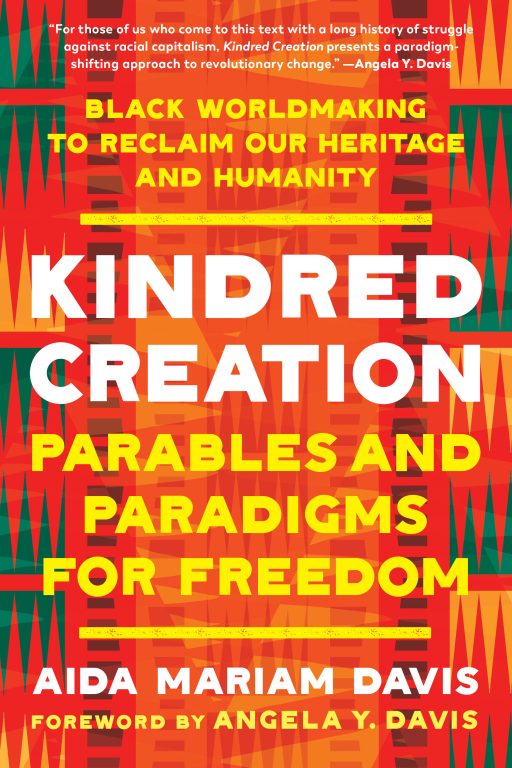
KINDRED CREATION:
Parables and Paradigms for Freedom
Aida Mariam Davis
Available for purchase at Marcus Books
UPCOMING EVENTS
Thursday, February 27
- 11am – 1pm Multicultural Community Center, University of California, Berkeley. Bancroft Way Berkeley, CA.
- 5-8pm “Literacy for Liberation” in conversation with Tommy Orange. 1150 35th Ave. Oakland

Be the first to comment