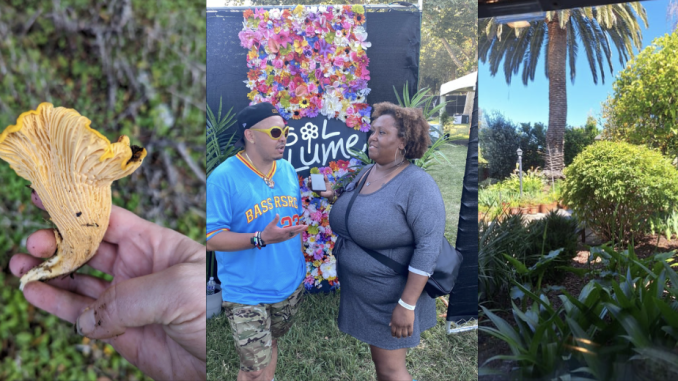
Oakland Voices alum reflect on four years since the beginning of the pandemic. Some found new hobbies – mushroom foraging, for example – while others were at turning points in their careers. Part one of our series about how COVID has changed our lives.
Finding Fungus
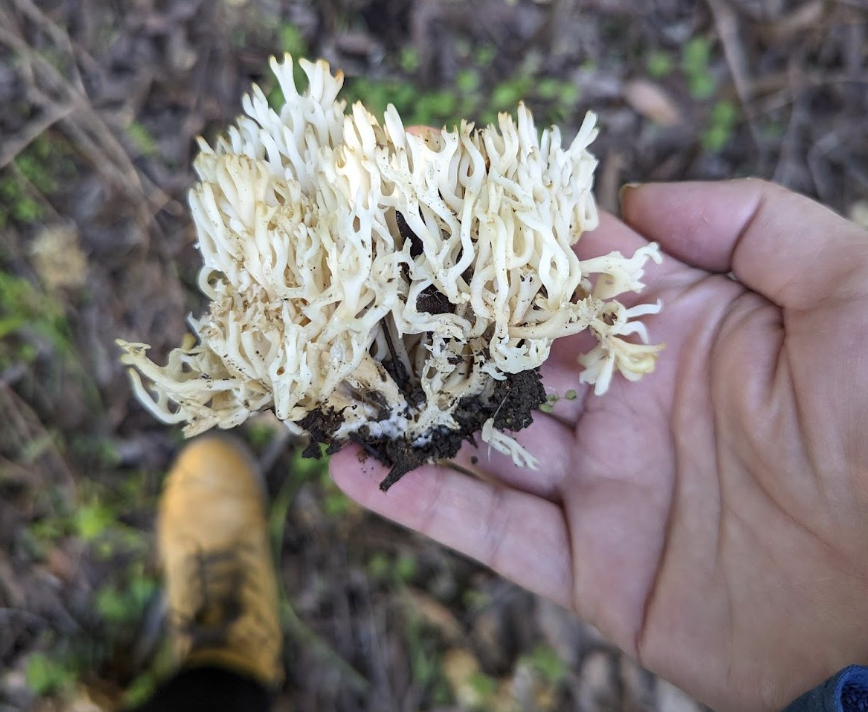
Mushroom hunting is not the most glamorous of hobbies – I often come home with mud all over my boots and twigs in my hair, not to mention the fungal specimens in varying states of decay that I tend to leave outside on the railing outside my door…or in the fridge…or in my coat pockets.
People’s first question when I tell them about mushroom hunting is always, “What if you get poisoned?” Here’s the thing: my interest is mostly scientific; it’s fascinating to learn about all the many unusual species that grow all over the East Bay. Nobody should eat anything they forage unless they are 100% sure of the id, of course. There are a number of tools that helped me to get better at identification, like the help of online forums, a good field guide or two (All That the Rain Promises and More by David Arora is my favorite) and an excellent photo id app called iNaturalist.
Four years ago, our city turned into an eerie mix of boarded-up businesses, protests downtown, and masked people walking around alone. I had to get outside of our 900 square foot house and occupy my mind with something that wasn’t about COVID, the presidential administration, or handling remote learning issues with my students as an educator with OUSD.
So what is it about mushroom hunting that got me hooked? Getting fresh air and exercise is good, but getting a great photo of a species I’d been looking for is the best feeling – it’s the hunt that makes me happy! There’s a joke in the mushroom hunting community: “It’s not miles per hour, but hours per mile.” You have to be persistent and focused to get a sense of what a “juicy” spot is for a mushroom flush. Seeking out (and finding) the egg-yolk yellow of a chanterelle in a grove of oak trees, the ghostly-white “fairy fingers” in pine needles, or a hidden ring of the iconic bright red fly agaric is a lot like solving a puzzle. Luckily for us Oaklanders, within the city limits are a number of large, well-maintained parks full of diverse species of fungi and slime molds that flourish once the rain starts soaking in.
In the pandemic year, there was a feeling of futility – like nothing would be normal again, and nobody could do anything about it. Mushroom hunting reminded me that good things can grow in the dark. – Sara Rowley
The Pandemic Reframed my Writing and My Perspective

The pandemic of COVID-19 wasn’t just a respiratory disease that impacted us. These past four years have felt like a lifetime of reframing perspective. For me, 2020 was the beginning of a life shift because it was the beginning of my freelance journalism career. While simultaneously watching national news headlines in real time, I had just graduated with my Oakland Voices cohort.
The more recent layoffs of journalists from major publications like Vice, Wall Street Journal, and LA Times means that traditional paths wouldn’t be the answer for me as a burgeoning writer. Writing about Oakland and the greater Bay Area for a number of publications at the same time was surreal because nothing that was happening locally matched the global view.
We watched as insurrectionists storm the U.S Capitol, cargo ship blocked the Suez Canal impacting global supply chains, and whatever was happening with the Johnny Depp and Amber Heard trial case. Closer to home, Oakland has experienced an influx of attention on crime, political mishaps, and the continuing crisis of our unhoused communities.
But what gets overlooked or possibly even dismissed was we danced in the rain to unveil legacies, celebrated Black queer communities, and worked on solidarity between Asian and Black communities. We created our own entrepreneurship programs, pushed music cultures forward, and created world recognizable partnerships.
The pandemic was a mix of deconstruction, reconstruction, and learning what our seat at the world table really means: pivoting, finding opportunity, and progress and joy in the outside world’s noise. – Brandy Collins
“One of the Fortunate Ones”
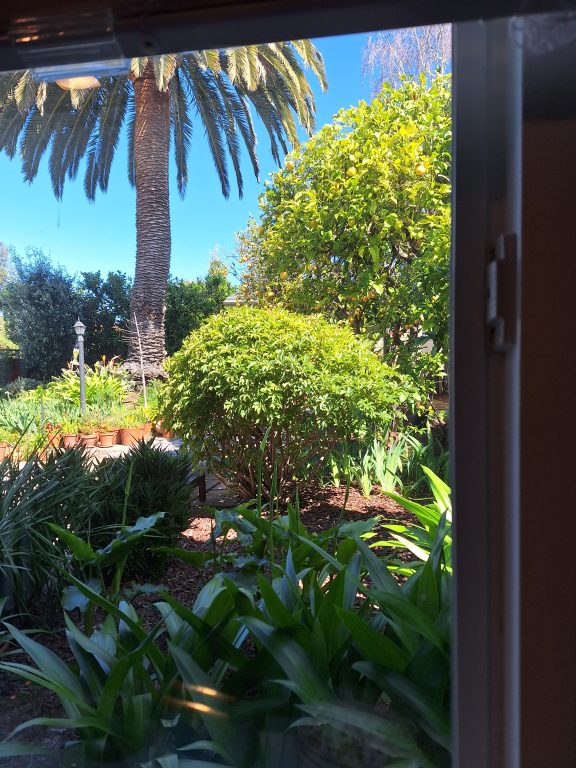
I was in England four years ago when COVID hit in 2020. I remember those first months of the pandemic, when people were dying in hospitals, alone and unable to breathe.
At the start of the pandemic, I wrote about how the pandemic was affecting teachers, parents, and musicians and it was heart-breaking to hear their stories: for teachers working in low-income neighborhoods, desperately trying to locate laptops and internet access for children; for parents, struggling financially when their work hours were reduced or they were laid off, or they were ineligible for government assistance because they were undocumented; for musicians, gigs drying up and not having access to the invigorating human contact they get when performing in public.
I know that I was one of the fortunate ones. Although I missed seeing family members and friends in person, I’m accustomed to working from home and have a pretty good internet connection, so COVID didn’t change that. I like to exercise by hiking and walking in my neighborhood, and I was able to continue doing that. I’m retired, so my income wasn’t affected.
I was surprised when I tested positive for COVID in September, 2023. After all, I’d kept up with all the vaccines. I was mostly careful about wearing a mask, though not in small groups any more. But, I was lucky. Apart from a very sore throat that made it incredibly hard to swallow even my saliva and feeling very tired for a couple of weeks after I tested negative, I didn’t have a bad case, unlike many people.
One big change due to COVID turned out to be a huge benefit. My sister and I rarely talked on the phone before COVID, but since the start of the pandemic, we’ve had long weekly calls, which are one of the highlights of the week for me. At first, we called out of concern for the health of our respective families, but discovered that we enjoyed these regular calls, so have made it almost like a ritual. In fact, as I write this, I’m waiting for my sister to call. – Katharine Davies Samway


I completely agree with the author’s sentiment. COVID-19 has had a profound impact on my life, particularly in regards to my mental health. The constant uncertainty and fear of the pandemic has made it difficult for me to focus and be productive. I’ve also noticed a significant decrease in my social interaction and community involvement, which has truly taken a toll on my overall well-being. It’s important to acknowledge and discuss the unseen effects of the pandemic, like the emotional toll it takes on individuals, in order to find ways to mitigate them. Thank you for sharing your experience and starting this important conversation.